


Ever observed how some animated characters seem to fly off the screen, immediately attracting attention and emotion? That’s the magic driving 3D character animation for beginners into the spotlight. With a 2026 forecast of more than USD 31.4 billion, the worldwide 3D animation market is driving innovation not only in film but also in gaming, architecture, virtual experiences, and advertising.
At first look, 3D character animation might look intimidating; however, the use of simple tools and educational resources has actually made the learning of the basics easier than ever. Moreover, knowing the basic concepts will allow you to start off on the right foot whether you want to create just simple animated scenes or later hire 3D character animators for more complex work.
Great 3D character animation isn’t just about movement, it’s about emotion, timing, and storytelling working together to bring characters to life. — Umer Siddiqui, Head of Video Production at Diginautical
This guide for beginners presents the essential techniques, tools, and methods to help them confidently and creatively start producing interesting 3D character animations.
Read More: Why 2026 Is the Year to Go Digital And How Diginautical Can Help
What is 3D Character Animation?
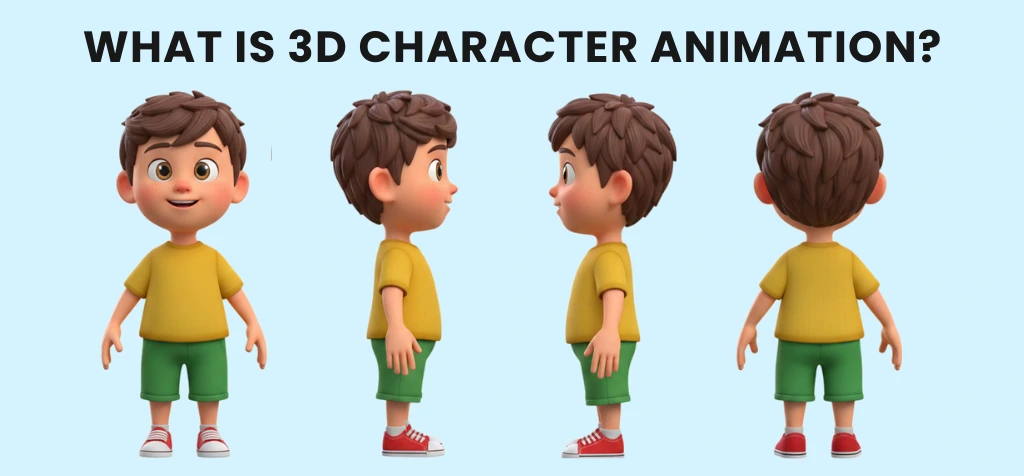
The art of giving digital characters life through naturalistic or expressive movements that tell a tale is called 3D character animation. Character animation stresses personality, emotion, and narrative via movement rather than motion graphics or other animation, which centers on visual effects, transitions, or abstract actions.
3D animation produces lifelike movement that almost duplicates actual physics and anatomy, whereas cartoon animation usually mixes stylized movement with exaggerated character qualities. This equilibrium lets animators create realistic motions while retaining inventive style, so audience members find the characters interesting and relatable.
Starting with 3D character animation for beginners depends on a grasp of this difference. This type of animation brings together technical know-how and artistic imagination to create strong and smooth animations that connect with the audience.
Why Learning 3D Character Animation Matters in 2026
The demand for 3D character animation is booming, making it a valuable skill for both creatives and businesses. Key reasons to start learning include:
- Rising Content Demand: With the help of 3D animated explainer videos and materials, marketers, brands, and YouTubers are interacting with the audience more and more.
- Expanding Industries: The increase in demand for skilled animators is a result of gaming, virtual reality, and augmented reality, plus the rise in their applications.
- Multiple Career Opportunities: Mastering 3D character animation is a pass to many possibilities, including going solo, working in an animation studio, or being part of the team creating indie games.
- Professional Integration: Companies that require 3D character animation for their high-quality images will be able to use the services for improving their storytelling and customer engagement strategies.
How to Animate 3D Characters: Step-by-Step Process
Creating 3D character animation involves a series of structured steps that transform static models into expressive, lifelike characters.
Character Modeling
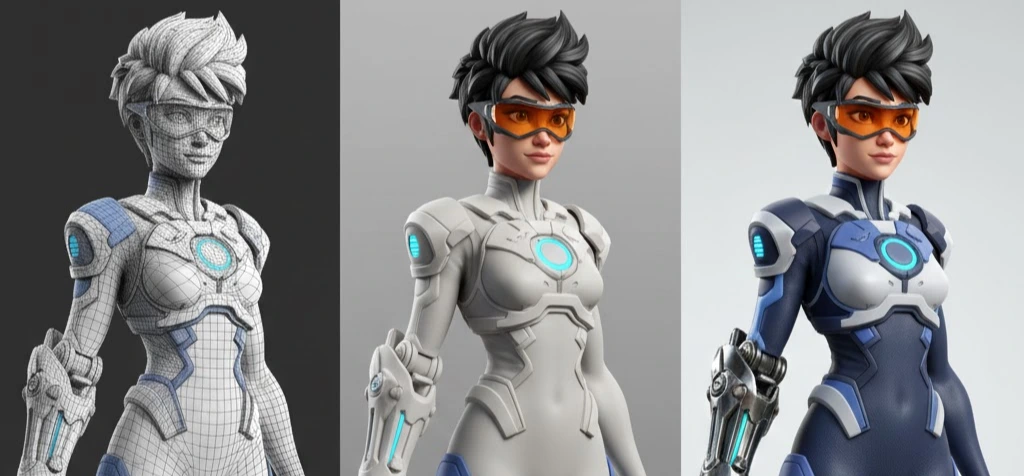
Beginning with the base mesh that gives form to your character is modeling. Sculpting provides muscle, facial characteristics, and clothing details. Beginner-friendly 3D character animation tutorials usually advise beginning with basic humanoid forms. This phase is reachable with tools like Maya or Blender. Well-built models guarantee later in animation accurate motion and fluid rigging.
Character Rigging
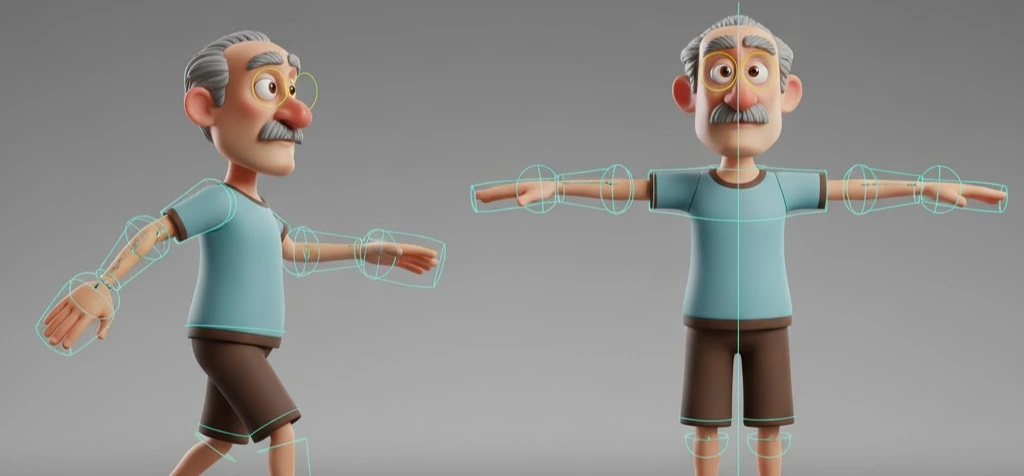
Rigging is the process of creating a digital skeleton that makes the character’s 3D model move in a lifelike manner. For anyone learning 3D character animation for beginners, understanding bones, joints, and control handles is essential, as they allow the digital character to perform movements similar to a human. The right rigging ensures smooth animation; for example, a human model will have its arms, legs, spine, and facial expressions rigged so it can perform natural gestures and a wide range of motions.
Motion Animation
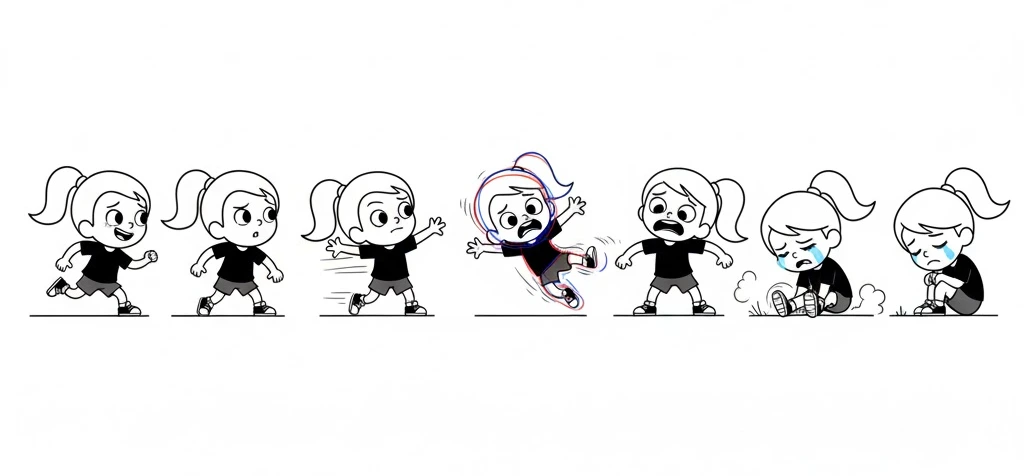
Motion animation is where the character comes to life. Animators produce lifelike motion using motion arcs, keyframes, and easing methods. For personality and feeling, timing and spacing are very important. 3D explainer videos or YouTube content depend on this step so that characters can naturally interact with their surroundings.
Texturing & Lighting
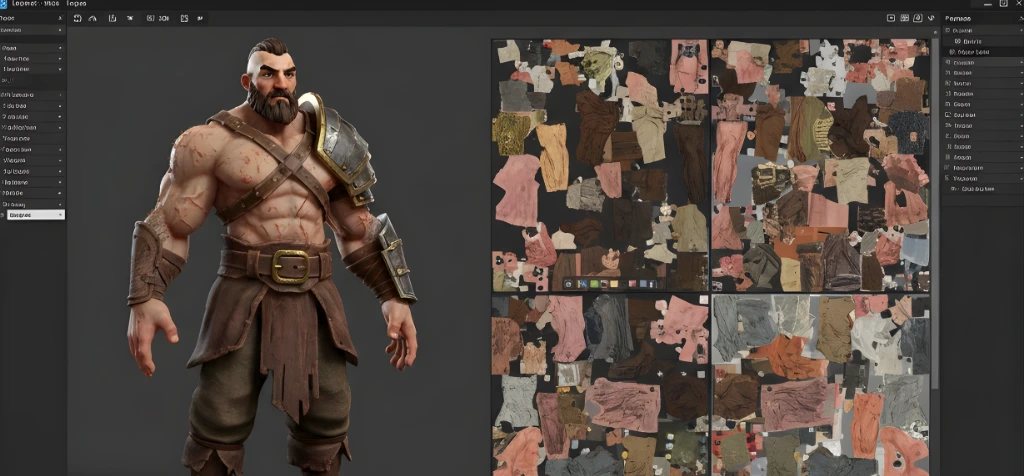
Texturing gives color, brings in materials, and adds surface details, while lighting creates atmosphere and highlights the character’s features. For those learning 3D character animation for beginners, applying shaders and textures allows you to achieve either a realistic look or a stylized one. Thoughtful lighting decisions not only enhance visual appeal but also improve the character’s readiness for professional 3D animation services or stylized projects..
Rendering & Export
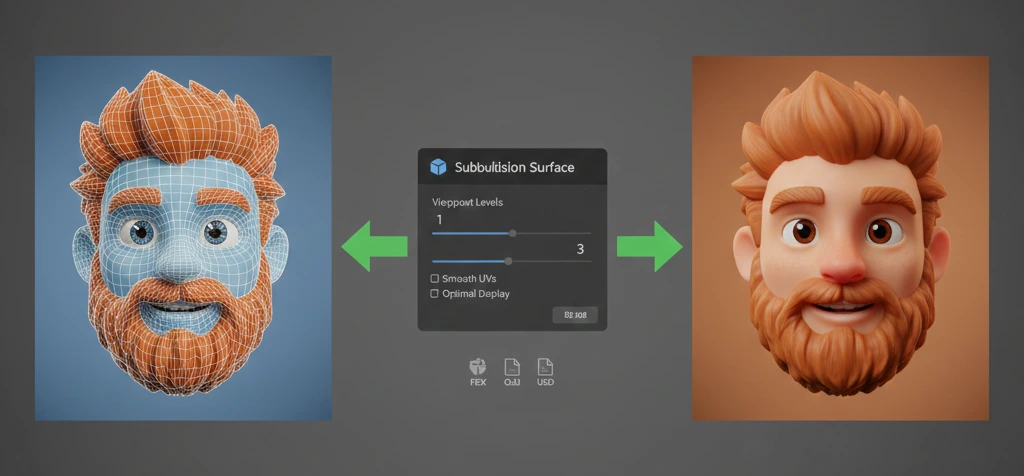
Rendering turns your animated scenario into a final video or series ready for editing. Knowing the cost to hire 3D character animators lets newcomers assess in-house study against outsourcing. For YouTube, marketing films, or 3D explanation projects, optimum output operates smoothly.
Read More: 15 Best Mobile App Development Companies in USA
3D Character Animation vs 2D Cartoon Animation: What’s the Difference?
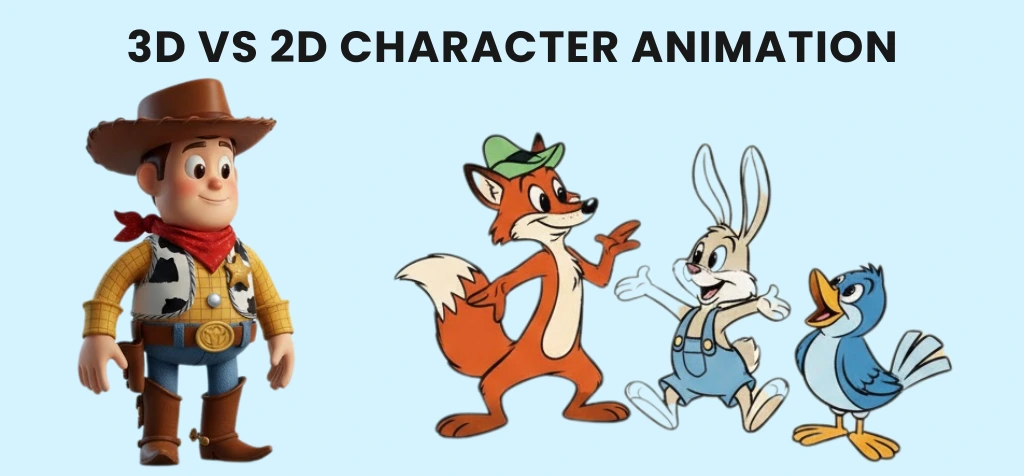
Many people don’t know the difference between 3D character animation and 2D cartoon animation, yet choosing the right type is crucial for project goals. Here’s how:
Features |
3D Character Animation |
2D & Cartoon Animation |
| Depth & Perspective | Offers realistic depth and spatial environments, giving lifelike movement and interaction | Flat visuals, limited depth; relies on artistic perspective for dimension |
| Motion Realism | Supports complex rigs, joints, and physics-based movement for natural animations | Stylized, exaggerated motion; often less realistic but more expressive |
| Character Detailing | High detail possible: textures, lighting, shadows, facial expressions | Simplified details; focuses on shape, lines, and stylistic features |
| Production Complexity | Requires modeling, rigging, texturing, lighting, and rendering; longer production times | Easier pipelines; mainly drawing, frame-by-frame, or vector-based animation |
| Use Cases | Explainer videos, games, AR/VR, YouTube content needing realism | Educational videos, cartoons, short stylized YouTube content |
| Flexibility | Can integrate with 3D assets, VFX, and interactive experiences | Limited to 2D platforms, easier editing, faster turnaround |
3D Character Animation Tools & Software for Beginners
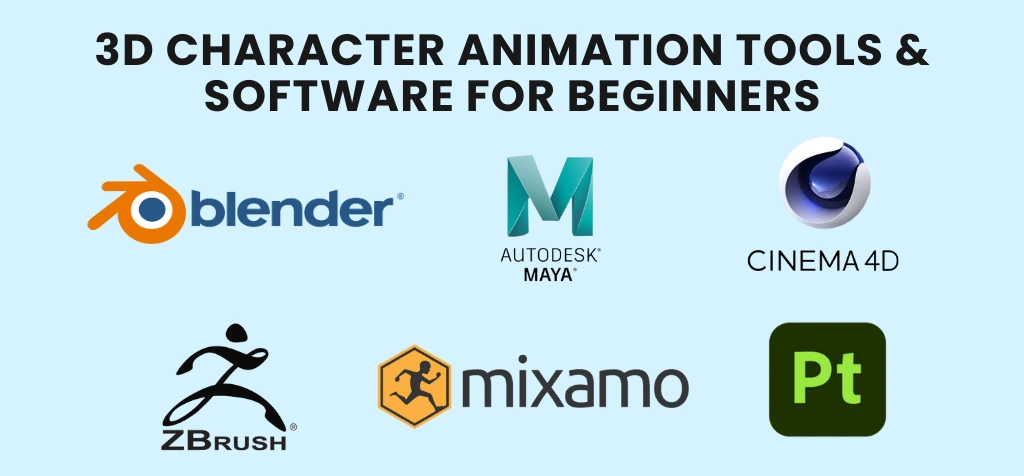
Software that quickly brings ideas to life and supports other devices like motion capture or AI-assisted animation is essential for 3D character animation for beginners, helping them acquire basic skills, while also providing experts with tools to manage complex projects, enhance workflow, and expand creative options.
Beginner-Friendly 3D Animation Tools
For the inexperienced, programs such as Blender, TinkerCAD, or Daz 3D offer a user-friendly interface and tutorials to learn from and to get character building started. These tools give the opportunity to play with modeling, basic rigging, and motion animation. A suggestion: Start with the simplest of projects and then gradually move on to more complex features.
Professional Software for Advanced Animators
Professional character animation projects frequently include high-end modeling, rigging, and rendering capabilities needed by advanced animators and are often done with Autodesk Maya, 3ds Max, Cinema 4D, or Houdini. The film industry, game development, and detailed 3D explainer videos are among the areas where the use of these tools is widely accepted by the studios.
Read More: Top Software Development Companies in USA
Common Mistakes Beginners Make & How to Overcome Them
When starting with 3D character animation for beginners, it’s common to encounter pitfalls that can waste time, produce unusable renders, or create poor motion quality.
Skipping Fundamentals
Many first-timers start animating without first mastering rigging or keyframes, which causes erratic motion.
Solution: Understanding basic actions guarantees better 3D character animation outcomes and a seamless workflow.
Overcomplicated Rigs
Creating excessively complicated rigs might increase errors and slow down animations.
Solution: Beginners may keep control while studying 3D character animation methods by using first basic rigs and then progressively more complex ones.
Ignoring Timing and Motion
Ignoring motion arcs and timing produces stiff or robotic animations.
Solution: Correct planning, references, and soothing methods help to improve the fluidity and expressiveness of character actions.
Bad Render Settings
Incorrect rendering setups might result in extended render times or subpar output quality.
Solution: Proper configuration guarantees results fit for 3D explainer videos or YouTube video editing.
Export Issues for Online Sharing
Wrong formats or frame rates could render created animations unsuitable for digital platforms.
Solution: Platform-compatible exports guarantee seamless insertion into sharing channels and editing processes.
Read More: Why Diginautical Is the Perfect Partner for Enterprise Software Development
When Should You Hire 3D Character Animators?
Employing expert 3D character animators is sensible for big projects needing accuracy, uniform quality, and sophisticated motion sequences. This covers character-driven campaigns, commercial animations, or even podcast video editing where animated visuals enhance storytelling.
Small projects or learning experiments can start at home for beginners investigating 3D character animation; however, professional animators provide value when the assignment calls for superior production quality or quicker turnaround.
To provide polished, professional animations, our team combines technical know-how, inventiveness, and process efficiency. Diginautical can realize your vision with scalable, high-quality outcomes when you’re ready to elevate your animated concept.
Read More: How to Choose the Best Tech Stack for Mobile App Development
Final Thoughts
3D character animation for beginners is nowadays more accessible than it has ever been. Anyone can start producing fascinating animated characters with simple tools, defined processes, and lots of learning materials. Concentrating on basics like modeling, rigging, and motion guarantees easy advancement and paves the way for professional-quality results.
Your expanding talents enable you to move up into sophisticated pipelines, work with groups, or create commercial-quality content. For companies and artists looking for professional assistance, Diginautical offers first-rate 3D character animation services that combine inventiveness, technical expertise, and speed to bring your animated projects to life with consistent, high-quality outcomes.
Frequently Asked Questions
Blender is ideal for beginners, offering intuitive tools, tutorials, and a free platform to start animating 3D characters.
Depending on complexity, beginners can complete a basic animation in a few days to a couple of weeks.
No, coding isn’t required for most animation software; creativity and understanding animation principles are more important.
Yes, 3D animations are perfect for explainer videos, storytelling, and marketing content on YouTube.
For large projects, commercial campaigns, or detailed sequences where quality and efficiency are crucial, hiring experts is recommended.


