

A hospital today needs a lot more than just doctors and medical equipment to work. A complicated digital system keeps healthcare running by keeping track of appointments, patient records, lab reports, and billing. The healthcare IT market is projected to expand at a compound annual growth rate (CAGR) of around 5.6% through 2031, driven by the adoption of telemedicine platforms, electronic health record systems, and connected healthcare infrastructure.
As healthcare providers shift toward more efficient and patient-centric care models, the demand for custom software development for healthcare has increased significantly. This is why custom healthcare software is gaining attention across the industry. Custom platforms let hospitals, telehealth providers, and medical networks combine patient management systems, remote monitoring tools, and billing platforms into one system.
Smart custom healthcare software turns complex operations into seamless, patient-focused experiences. – Mubashir Faiz, CEO at Diginautical
Advanced healthcare platforms usually cost between $40,000 and $250,000 to develop, depending on how complex they are. By hiring reliable custom software development services, healthcare organizations can build systems that can grow with them and provide better care to patients.
Read More: 20 Profitable Tech Startup Ideas You Can’t Miss
What is Custom Software Development for Healthcare?
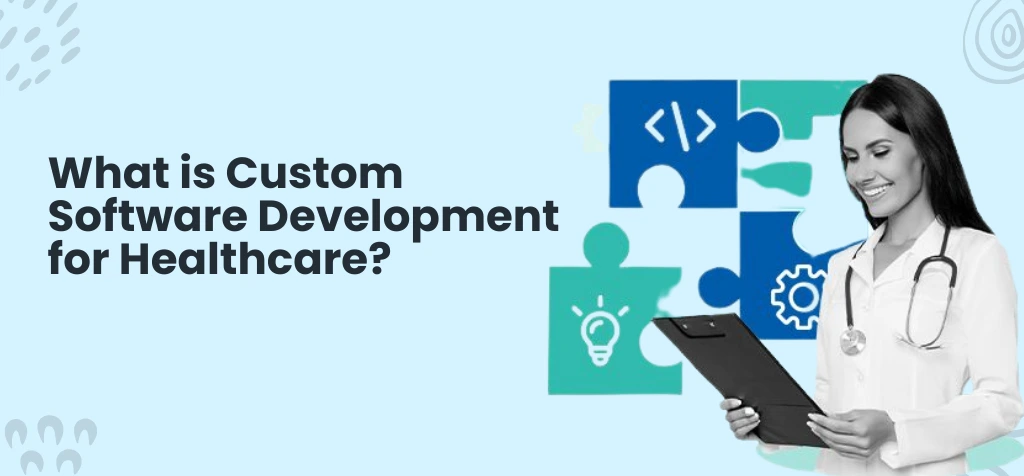
Custom software development for healthcare means making and designing digital systems that are specific to the needs of hospitals, clinics, telemedicine providers, and other healthcare organizations. Custom healthcare software is made with specific workflows, patient management processes, and regulatory requirements in mind, unlike generic platforms. These solutions help healthcare providers run their businesses more smoothly, make it easier for departments to talk to each other, and make sure that patient data is managed correctly.
Healthcare organizations can use advanced custom software development services to create platforms that bring together many systems into one digital space. Customized development makes it easier to protect data, make systems work together, and follow strict healthcare rules.
Core Components of Healthcare Software
Modern healthcare software solutions often combine several systems to manage clinical, administrative, and operational tasks. Through specialized mobile app development services and ERP development services, organizations can build integrated platforms that connect patients, healthcare professionals, and administrative teams in one ecosystem.
- Electronic health records and medical record management
- Virtual consultation and remote monitoring platforms
- Patient appointment scheduling and care coordination
- Insurance processing and automated billing workflows
- Internal communication and workflow management systems
- Content and data management for healthcare operations
Types of Custom Healthcare Software Solutions
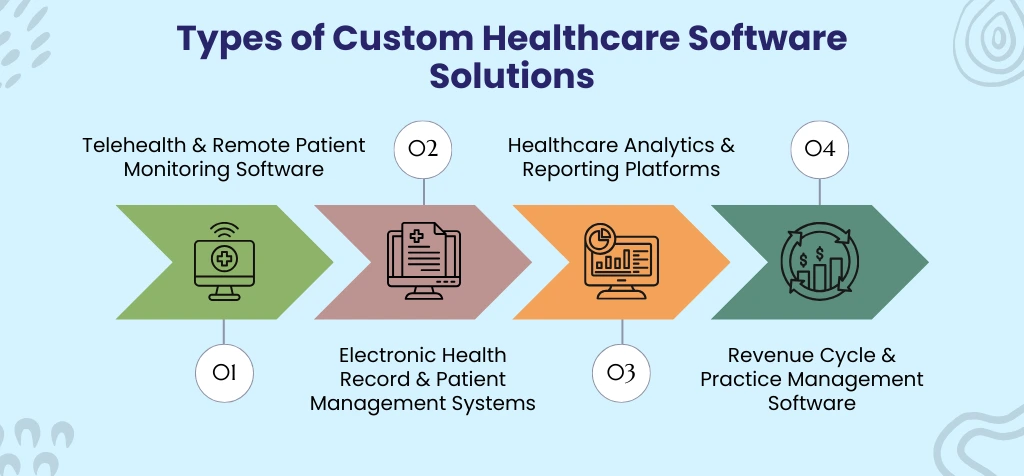
Healthcare organizations today use a wide range of digital tools to handle patient care, administrative tasks, and patient engagement. Hospitals and providers use custom healthcare software, healthcare mobile app development, and cloud-based healthcare systems to provide safe and efficient healthcare.
Telehealth & Remote Patient Monitoring Software
Healthcare providers increasingly adopt telemedicine and virtual healthcare platforms and remote patient monitoring software to deliver care beyond hospitals. These platforms support teleconsultations, wearable device integration, and remote care application development, improving accessibility and continuous patient engagement.
Electronic Health Record (EHR) & Patient Management Systems
EHR platforms form the backbone of modern custom healthcare software, enabling secure patient data storage and seamless interoperability. Integrated healthcare data integration solutions allow providers to manage records, appointments, and treatment histories within centralized digital environments.
Healthcare Analytics & Reporting Platforms
Advanced health analytics & reporting platforms enable hospitals to analyze clinical performance, patient trends, and operational efficiency. Through intelligent data processing and integration with cloud-based healthcare systems, organizations can generate insights that support better clinical and administrative decision-making.
Revenue Cycle & Practice Management Software
Financial efficiency is critical for healthcare providers. Solutions like billing & revenue cycle management software, often developed with expertise similar to a finance software development company, automate billing, insurance claims processing, and scheduling, helping organizations reduce administrative workload and improve revenue management.
Read More: 12 Leading Software Development Life Cycle Models You Should Know
Healthcare Software Development Lifecycle
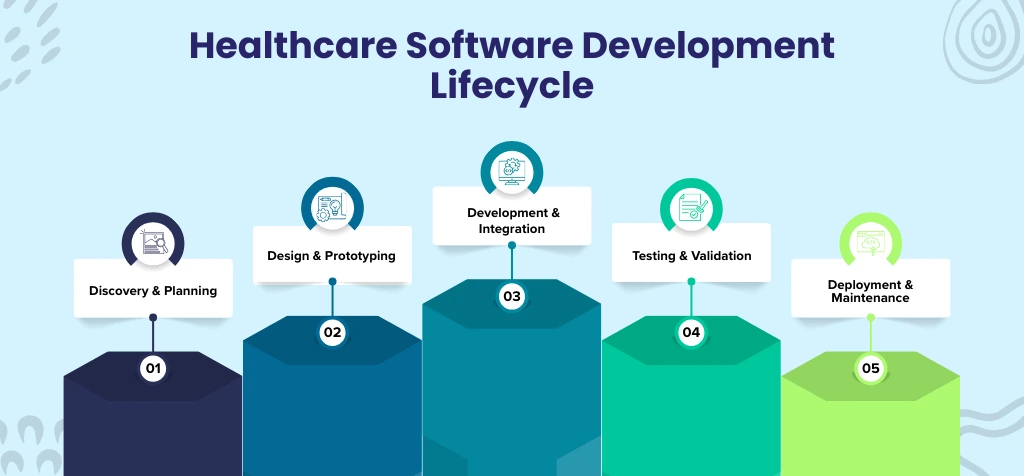
Companies that know how to apply the principles of building custom automotive software solutions to healthcare systems use software product development services, scalable software architecture, and strong web development services to make digital healthcare platforms that work well.
Discovery & Planning
The first phase focuses on research, strategic planning, and defining project requirements. Healthcare providers often hire custom software developers to analyze workflows, identify system requirements, and ensure healthcare interoperability solutions support seamless data exchange between hospitals, labs, and digital platforms.
Design & Prototyping
At this point, teams create user-friendly interfaces for both patients and medical staff. Wireframes and interactive prototypes help you see how things will work, make them easier to use, and get feedback early on. This makes sure that the final healthcare platform meets the needs of patients and staff in real life.
Development & Integration
This phase involves building the core system architecture and integrating multiple platforms. Through mobile app development and CRM development for healthcare, developers connect backend systems, cloud infrastructure, and APIs to create a unified healthcare technology ecosystem.
Testing & Validation
Before launch, the software undergoes extensive quality assurance to ensure reliability and compliance. Teams test functionality, system performance, and data protection measures to meet HIPAA-compliant healthcare software standards while maintaining secure healthcare data solutions for patient information.
Deployment & Maintenance
Healthcare platforms need to be constantly improved and updated after they are deployed. Software maintenance and support services and CMS development services help providers keep their systems up to date, expand their infrastructure, and make sure that their software is always reliable by providing ongoing maintenance and support.
Read More: End-to-End Custom Software Development Process for Businesses
Industry Applications of Healthcare Software
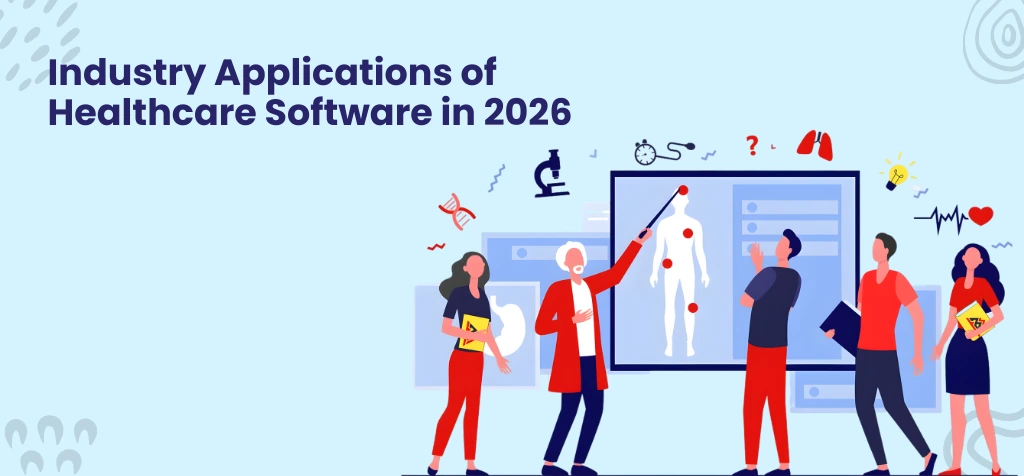
Modern healthcare systems rely on advanced healthcare software solutions to improve efficiency, enhance patient experiences, and streamline operations.
Hospitals & Clinics
Hospitals and clinics increasingly depend on tailored systems developed by a healthcare software development company to manage daily operations. These platforms support electronic records, appointment scheduling, inventory management, and telemedicine services, helping medical professionals deliver faster, more coordinated patient care.
Telemedicine & Virtual Healthcare Platforms
Digital healthcare providers rely on scalable healthcare software solutions to enable remote consultations, wearable device integration, and secure data sharing. These systems power modern telehealth services and cloud-based healthcare systems that connect patients and doctors regardless of location.
Cross-Industry Applications
Healthcare platforms often integrate with services developed by an ecommerce software development company or a finance software development company to manage payments, insurance processing, and service marketplaces. These integrations support practice management software and improve operational efficiency across healthcare frameworks.
Why Choose Diginautical for Healthcare Software Development?
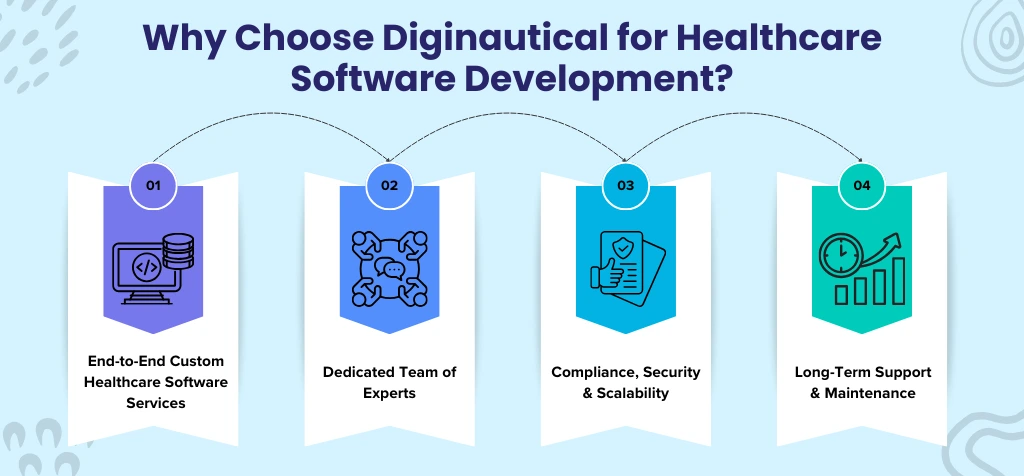
Diginautical is a trusted healthcare software development company that offers customized solutions that help modern healthcare systems through strategic planning, innovation, and high-quality custom software development for healthcare.
End-to-End Custom Healthcare Software Services
Diginautical offers full custom software development for healthcare, including system architecture, mobile platforms, and enterprise solutions. Our services include integrated platforms, advanced analytics, and adaptable systems made by skilled engineers. These help healthcare organizations run their businesses more smoothly and give patients a better experience.
Dedicated Team of Experts
Businesses can hire custom software developers and experienced engineers who specialize in healthcare technology. Our dedicated teams also allow organizations to hire web developers and mobile specialists focused on building secure, user-friendly healthcare platforms tailored to clinical workflows and operational requirements.
Compliance, Security & Scalability
Healthcare platforms demand strict compliance and data protection. Diginautical builds solutions with strong security standards, HIPAA-ready frameworks, and cloud-enabled architectures designed for long-term scalability, ensuring healthcare systems remain reliable, secure, and adaptable to evolving industry requirements.
Long-Term Support & Maintenance
Our partnership goes on after development. Diginautical offers ongoing monitoring, updates, and modernization services to make sure that healthcare systems work well. This proactive approach makes sure that the software environments are stable over time, perform better, and adapt to changes in healthcare technologies and patient care needs.
Read More: Why Diginautical Is the Perfect Partner for Enterprise Software Development
Future Trends in Healthcare Software Development
More and more, modern hospitals and medical startups are using telemedicine and virtual healthcare platforms, as well as remote patient monitoring software, to provide care outside of traditional clinical settings. These technologies let healthcare professionals keep an eye on patients’ conditions, hold virtual consultations, and get better results from treatments. They also make it easier for physical healthcare facilities to do their jobs.
At the same time, advanced analytics and AI app development services are helping businesses process a lot of medical data so they can make decisions faster and plan better care. As healthcare organizations move toward connected ecosystems, the focus is shifting toward systems that can grow and support data sharing, mobile access, and long-term interoperability across healthcare networks.
- People are increasingly turning to remote consultations and digital care models.
- More and more people want mobile apps that focus on patients
- Expansion of connected medical devices and wearable integrations
- A stronger focus on sharing data safely between healthcare systems
- More use of data-driven insights to make clinical decisions
- Digital healthcare infrastructure is always changing and improving.
Final Thoughts
Hospitals, clinics, and digital health providers can build platforms that fit their workflows, securely integrate patient data, and help them follow the rules by investing in custom software development for healthcare. These customized healthcare software solutions help businesses speed up tasks like managing patients, providing telemedicine services, billing, and analyzing data while keeping high levels of safety and dependability.
Working with a healthcare software development company, like Diginautical, that has been around for a while makes sure that healthcare organizations can create platforms that can grow and change over time. They help healthcare providers turn complicated operational needs into reliable digital solutions by using their knowledge of how to build secure, interoperable systems.
Frequently Asked Questions
Tailored to your workflows, it adapts to your processes instead of forcing you to adapt to the software.
Yes, modern platforms connect with EHR, billing, and CRM systems for seamless care delivery.
By centralizing records, enabling remote consultations, and automating routine tasks, patients get faster, smoother care.
With proper development and security protocols, custom systems are designed to meet HIPAA and other regulatory standards.
Not always, outsourcing to dedicated developers ensures expertise, continuous updates, and scalable support without staffing overhead.


