

Animation has a way of turning complex ideas into stories people instantly understand. According to Statista, the global animation market is projected to exceed $640 billion by 2030, underscoring how rapidly animation is becoming a central part of digital communication.
For companies, exploring the 2D character animation process is essential. From character design and storyboarding to animation and final editing, every stage contributes to crafting engaging visuals that resonate with audiences. This is exactly why 2D character animation has become one of the most powerful tools in modern marketing. From product launches to customer education, brands increasingly rely on animated storytelling to simplify messages and make them memorable.
A structured animation pipeline ensures every project delivers engaging visuals that align with a brand’s goals, from concept to final export. – Syed Irtiza Ali, Brand Manager at Diginautical
Today, businesses across sectors, including animation for tech startups, are investing in high-quality animated content to explain products, train teams, and market services. This growing demand has made 2D animation services from professional 2D animation studios increasingly valuable.
Read More: A Beginners Guide to 3D Character Animation
Understanding the Creative Engine Behind 2D Character Animation
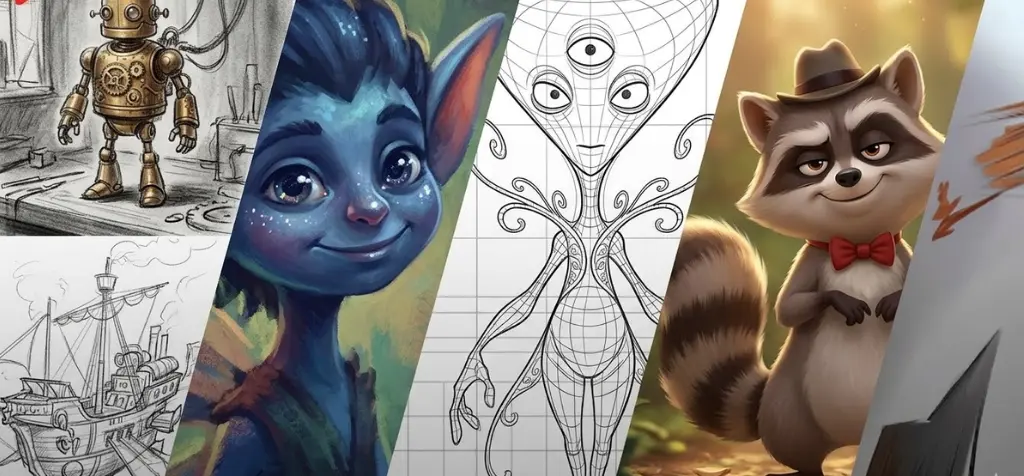
There is a structured character animation process behind every interesting animated story. This process combines art, storytelling, and digital production. 2D character animation lets brands turn ideas into characters that people can relate to and that help tell a story, explain a product, or show how a service works.
For many organizations, custom 2D character animation services play a key role in shaping animated character development for brands. A well-designed animated character can become a recognizable brand asset that communicates messages consistently across videos, campaigns, and digital platforms.
Why Businesses Use 2D Character Animation for Marketing
From product explanations to brand storytelling, animated marketing videos, product explainer animation videos, and promotional animation videos allow companies to communicate ideas clearly while maintaining audience attention. As a result, marketing animation for brands has become an effective way to simplify complex topics and make digital content more engaging.
Organizations in multiple sectors use animation as a communication and marketing tool, including:
- Healthcare organizations explaining medical services and patient processes
- Financial institutions are simplifying complex financial products
- SaaS companies demonstrating software features and workflows
- Corporate teams creating engaging employee learning and development content
The Complete 2D Animation Production Process
Professional studios follow a defined 2D animation workflow to ensure that storytelling, character design, motion, and post-production are all executed with precision. Whether a company is creating a product explainer, marketing video, or educational content, this systematic approach forms the backbone of the 2D character animation process.
The following stages outline how animation teams transform creative ideas into fully realized animated videos.
Stage 1: Animation Pre-Production
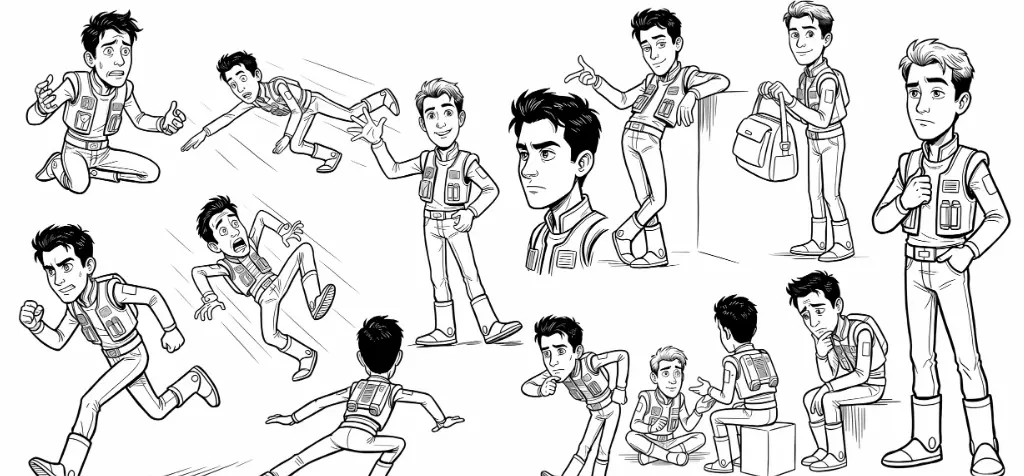
Every successful animated project begins with a strong foundation, and that foundation is created during the animation pre-production process. At this stage, creative teams define the core message, develop the visual direction, and establish how the story will unfold on screen. Whether the goal is to produce engaging promotional animation videos, simplify concepts through whiteboard animation services, or create content that complements formats like podcast video editing, pre-production ensures that every creative and technical decision supports the final objective.
The animated character design process focuses on creating characters that reflect the brand’s identity while remaining visually engaging for the audience. At the same time, storyboard creation for animation maps out each scene in sequence, providing a visual guide that helps animators understand pacing, transitions, and scene composition before production begins. This step ensures that the entire animation team shares a clear vision before moving into the more technical stages of the production pipeline.
Key elements typically defined during this stage include:
- Defining the core message and narrative structure
- Identifying the target audience and communication goals
- Establishing the visual style and artistic direction
- Planning scene flow and transitions for smoother storytelling
- Aligning the creative concept with marketing or educational objectives
Stage 2: Character Rigging and Asset Preparation
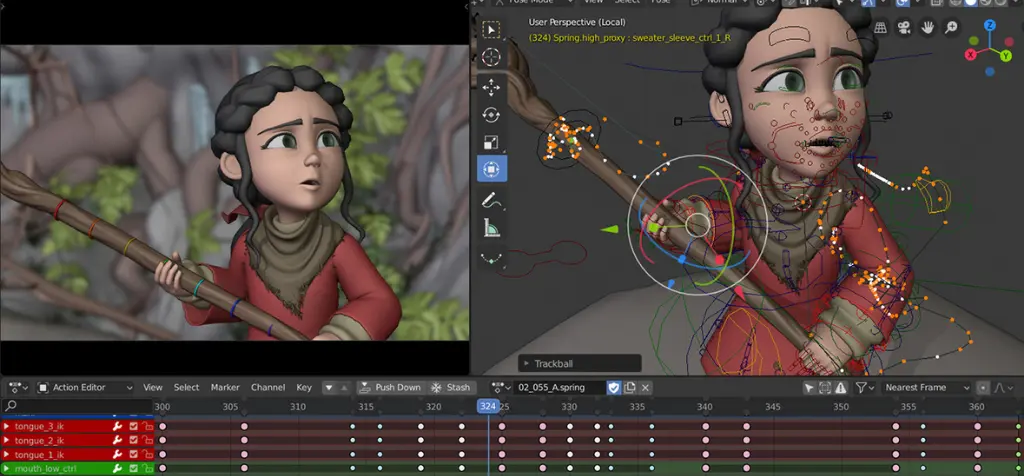
In this stage of 2D animation, illustrators and animators set up the character design so that it can move around and do realistic things on screen. This is called character rigging. Artists use modern digital animation tools and advanced animation design software to make digital skeletons, control points, and layered assets that let characters bend, rotate, and show emotions in a natural way. Rigging correctly makes sure that animation sequences stay smooth and consistent all the way through the production.
Well-prepared assets allow animators to integrate elements like motion graphics animation, visual effects, and transitions without compromising performance or visual quality. Rigged characters also help streamline later stages of production, including editing and even aspects of the animation sound design process, ensuring that movements and dialogue stay synchronized throughout the animated video.
Key elements typically prepared during this stage include:
- Breaking the character design into separate movable body parts
- Creating control points to manage body movements and expressions
- Organizing background elements and scene assets for animation
- Structuring layers to ensure smooth transitions and movements
- Preparing visual elements for integration into the animation scenes
Stage 3: The Frame-by-Frame Animation Process
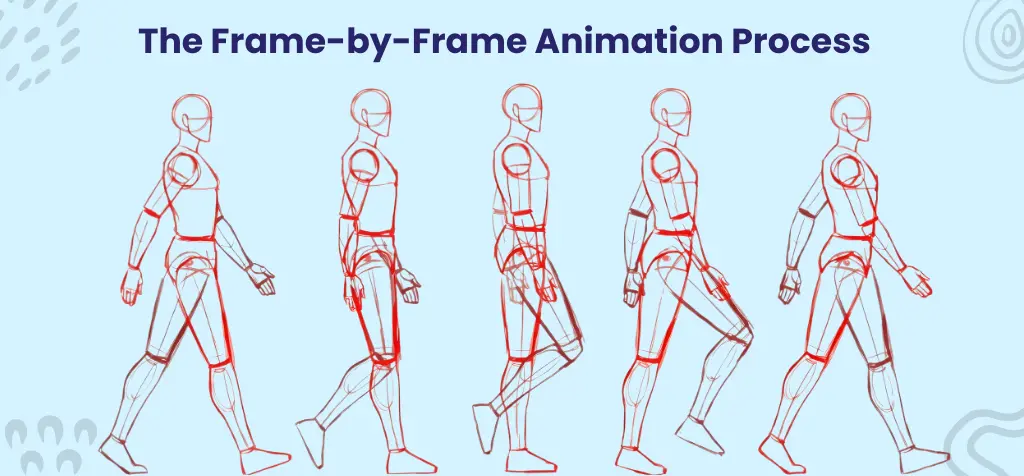
Animators use the frame-by-frame animation method, which involves carefully drawing or changing each frame to make the motion look smooth and real. This step is very important for character animation because it turns still pictures into moving performances that help the story move along.
To keep things consistent during the animation stage, professional studios use a structured professional animation pipeline. This is especially important when projects have a lot of scenes, characters, or complicated motion sequences. Animation work is often combined with other marketing services like 3D explainer video animation, 3D architectural animation, and social media video editing. This makes sure that the final content works well on all digital platforms and in all advertising campaigns.
During this stage, animation teams typically focus on several important production elements:
- Defining character movements and gestures across scenes
- Creating fluid transitions between keyframes
- Adjusting camera angles and visual perspectives
- Maintaining visual continuity throughout the sequence
- Preparing scenes for the next phase of editing and post-production
Stage 4: Animation Editing, Compositing, and Visual Effects
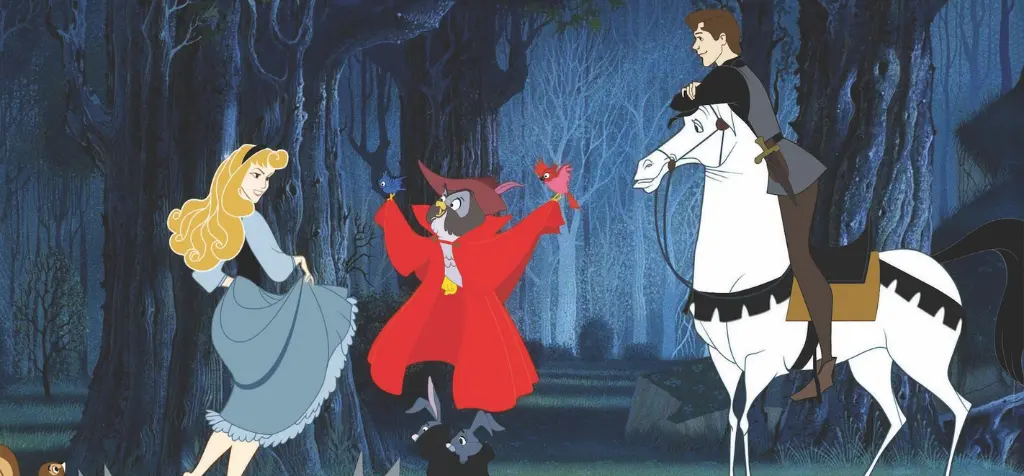
This step is very important for improving the video’s overall look and the flow of the story. Animators use advanced animation compositing techniques to put together character movements, backgrounds, lighting, and visual effects to make a single visual space. Professional teams also use special animation editing tools to improve transitions, change the timing, and make sure that each scene fits perfectly with the story and the style of the visuals.
Editors focus on refining pacing, aligning visuals with voiceovers, and enhancing scenes through marketing video editing techniques that make the content engaging and audience-friendly. Many studios also provide professional video editing services alongside animation production to ensure that the final video meets broadcast, social media, and marketing standards.
This integration allows studios to support multiple content formats and marketing needs, including
- Editing short-form clips for social media campaigns
- Optimizing videos for online platforms and marketing channels
- Preparing content for podcast visuals and multimedia presentations
- Creating platform-ready formats for streaming and content distribution
Stage 5: Sound Design, Rendering, and Final Export
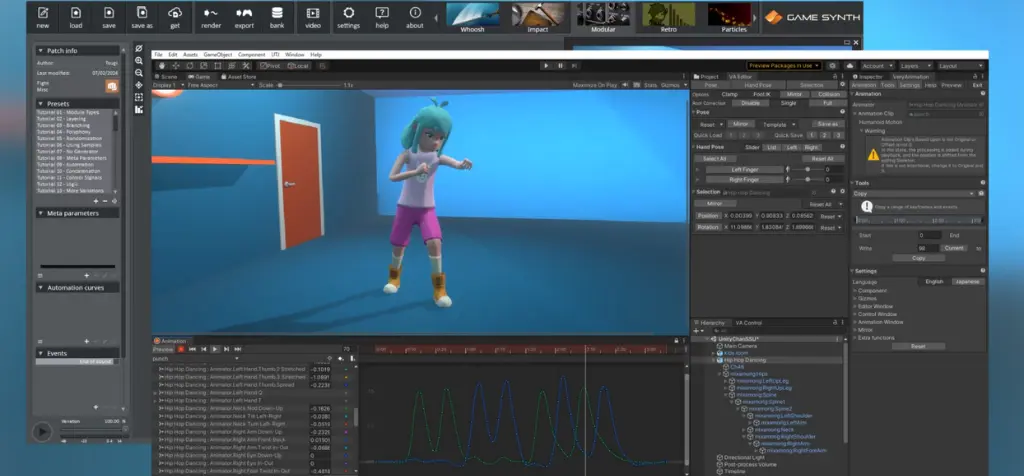
The final stage of the 2D character animation process focuses on transforming completed visuals into a polished, ready-to-publish video. This phase includes the animation sound design process, where voice, music, and sound effects are carefully integrated to enhance the storytelling experience. At this stage, many teams also collaborate with specialists or hire video editors to refine timing, adjust transitions, and ensure the audio and visuals align seamlessly.
After the sound and visuals are done, the project goes into animation rendering and export. This is where the final video output is made by processing scenes with advanced animation rendering tools. In a lot of production settings, the same technical workflow is used with other visual formats, like 3D product animation services.
Key elements finalized during this stage include:
- Voiceover recording and dialogue synchronization
- Background music selection and mixing
- Sound effects for actions and scene transitions
- Video compression and format optimization for different platforms
- Final delivery for marketing, web, and social media distribution
Read More: 2D vs 3D Animation: A Complete Guide for Businesses
2D Animation Pipeline Used by Professional Animation Studios
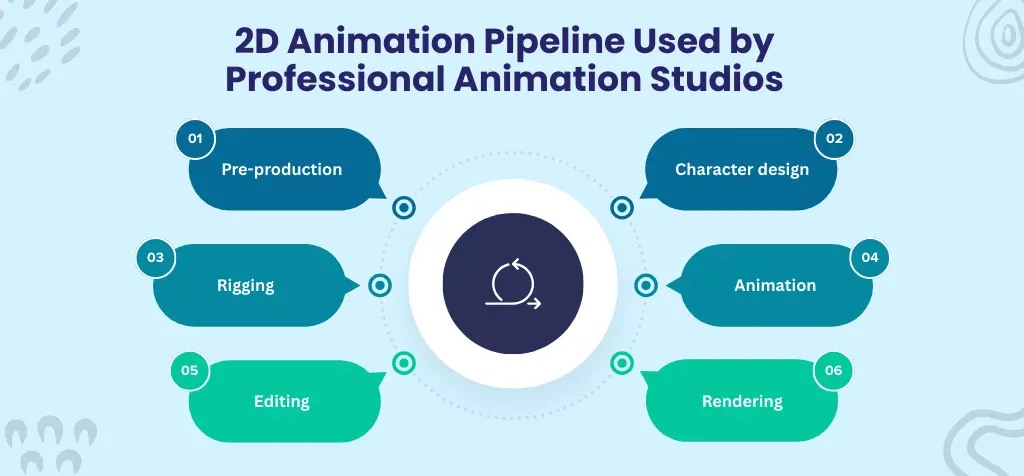
This professional animation pipeline makes the process of animating 2D characters easier, so studios can get the same results for both character animation services and bigger campaigns. Many studios also offer 3D animation services and may hire 3D animators to work on both 2D and 3D projects at the same time, as long as they keep their 2D workflows clear and consistent.
Pre-Production
During pre-production, studios define the story, script, and visual style. This stage sets the foundation for animated characters, outlining scenes, creating storyboards, and establishing timing to guide every subsequent step of the animation workflow.
Character Design
Character design focuses on developing unique personalities and appearances. Artists create expressive and marketable characters, often used in cartoon animation services, ensuring they align with the brand’s tone and storytelling goals.
Rigging
Rigging prepares characters for movement by adding skeletal structures or control points. This step ensures smooth motion during animation, allowing animators to manipulate characters efficiently and maintain consistency across scenes.
Animation
In the animation stage, characters are brought to life using frame-by-frame techniques or keyframe animation. Studios focus on movement, timing, and expressions to create engaging and natural performances for storytelling with the help of 2D and 3D animation services.
Editing
Editing combines scenes, audio, and effects to refine pacing and narrative flow. Animators collaborate with editors to polish transitions, synchronize sound, and ensure the overall video maintains viewer engagement throughout.
Rendering
Rendering turns the animated project into a final product of high quality. Studios use advanced animation rendering tools to make files that are ready to be shared on social media, marketing channels, and other digital platforms.
Read More: 2D vs 3D Cartoon Animation – Which is Right for Your Business?
How to Hire 2D Animators for Business Videos
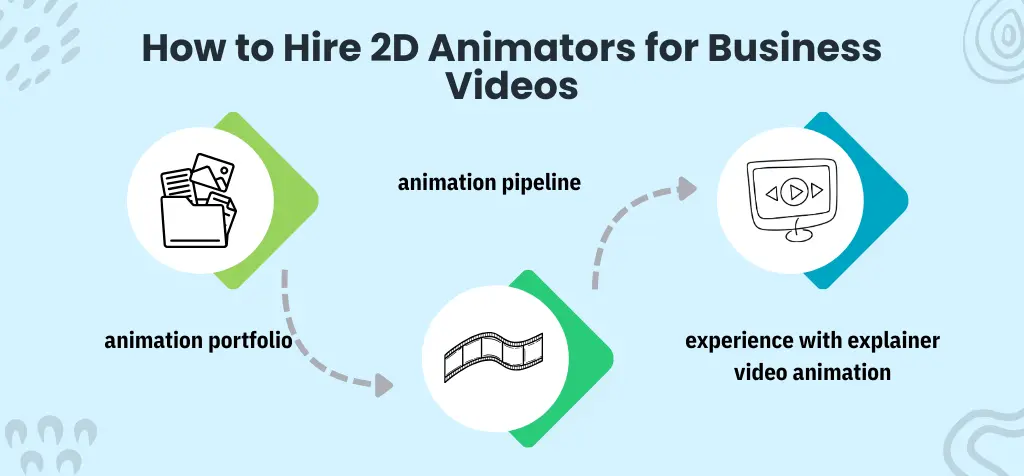
Finding the right people to work on your animated projects is very important for making sure that the 2D character animation process goes smoothly. The quality, consistency, and overall effectiveness of your business explainer videos and explainer video animations depend on who you choose to work with.
Evaluating the Animation Portfolio
Reviewing an animator’s portfolio provides insight into their style, creativity, and technical skills. Look for projects similar to your needs, such as social media video editing, explainer video animation, or character-driven storytelling. A strong portfolio reflects both versatility and attention to detail.
Assessing the Animation Pipeline
A professional workflow ensures projects run efficiently from concept to final delivery. Evaluate how the team structures their 2D character animation process, manages revisions, and integrates editing and post-production steps to meet deadlines and maintain quality.
Checking Experience with Explainer Video Animation
Experience with business explainer videos is vital for producing content that engages audiences. Candidates familiar with timing, messaging, and storytelling in commercial animations can deliver polished, effective videos aligned with marketing goals.
Read More: 10 Common Mistakes Businesses Make When Hiring 2D Animators
Why Choose Diginautical for 2D Character Animation Services
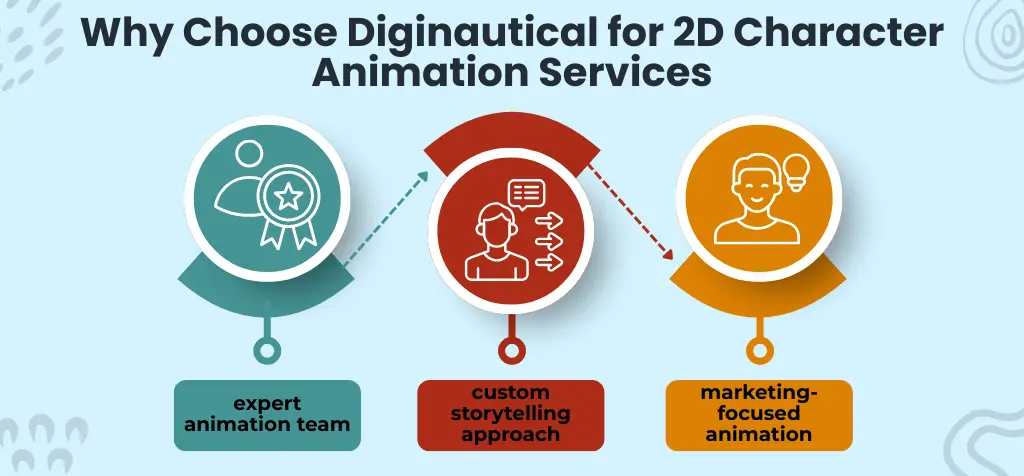
Diginautical is a professional animation studio that stands out for its ability to make animated content that is interesting, memorable, and useful for marketing. They do this by combining creativity, technical skills, and strategic storytelling. This is why companies trust us with their animation needs:
Expert Animation Team
Our team of skilled animators makes sure that every project follows a structured 2D animation workflow, which results in high-quality visuals that fit with your brand vision. We also do 3D character animation and 3D architectural animation to help tell a story in a variety of ways.
Custom Storytelling Approach
We craft unique narratives tailored to your audience, integrating characters, scripts, and motion to create impactful content. From explainer video animation services to whiteboard animation services, every project is designed to engage and convert.
Marketing-Focused Animation
Every animation we produce is optimized for audience impact and business goals, whether it’s cartoon animation services, 2D animation services, or 3D explainer video production. Our content ensures measurable results for marketing campaigns.
Hire Skilled Animators
Clients can hire 2D animators to help them scale their projects quickly. Our teams work together smoothly on pre-production, animation, and post-production to make videos that are ready to be published on any platform.
Read More: Choosing the Best 3D Animation Company – A Complete Guide
Final Thoughts
Knowing how to make 2D animated characters and following a step-by-step process for 2D character animation makes sure that every project looks good and meets business goals. We at Diginautical focus on creating animated characters for brands. High-quality 2D animation is a flexible tool that can be used for marketing campaigns, employee training, or telling the story of a product. It grabs people’s attention, makes complicated information easier to understand, and strengthens brand identity.
Frequently Asked Questions
The 2D animation production process varies by project complexity, number of characters, and scene length. Typically, short explainer videos take 4–6 weeks, while full-length marketing animations may require 8–12 weeks.
Studios rely on professional animation software tools like Toon Boom Harmony, Adobe Animate, and Clip Studio Paint. Combined with animation production software, these tools streamline workflow from storyboarding to final rendering.
It depends on the goal. 2D animation excels at storytelling and character-driven narratives, while motion graphics are ideal for data visualization, UI demonstrations, or abstract concepts. Each serves a unique creative purpose.
Absolutely. Animated marketing videos and promotional animation videos help brands simplify messages, engage audiences, and boost conversions, making them a powerful tool for campaigns across industries.


