

The mobile app ecosystem has entered a pressure-cooker phase. As applications grow more complex, the mobile app development workflow has expanded far beyond basic coding. Modern teams now manage integrations, cloud backends, testing pipelines, and performance optimization simultaneously. Tools must support collaboration, reduce technical debt, and adapt as products scale.
Users expect faster updates, smoother performance, and flawless experiences across devices, while businesses push for shorter release cycles and long-term scalability. In this environment, mobile app development tools are no longer just utilities for developers. They have become strategic enablers that directly influence product quality and development costs. Choosing the wrong mobile app development software today can slow innovation before the first line of code even ships.
Startups and enterprises need to choose their tools because this choice will determine their business operations throughout all future periods. The tools that companies select today will determine their software development processes and their future business operations.
Mobile app trends change every year, but success comes from how effectively teams adapt those trends into reliable products. – Syed Irtiza Ali, Brand Manager at Diginautical
Read More: 15 Useful Tips for a Successful Mobile Application
20 Best Mobile App Development Tools Powering Apps in 2026
The best mobile app development tools in 2026 are shaping how modern apps are designed, built, and tested by empowering teams to move faster while meeting rising expectations for performance and user experience.
Cross-Platform Dominance
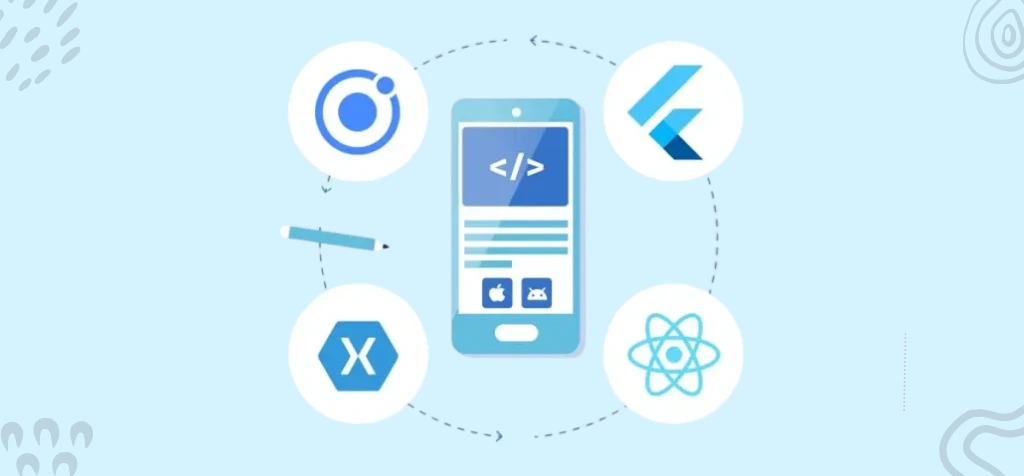
Cross-platform mobile app development tools have become a core pillar of modern app strategies in 2026. These tools enable businesses to create applications that work on multiple platforms while maintaining optimal performance and user experience. Organizations use Flutter development tools and React Native development tools to create unified codebases that operate efficiently across both iOS and Android platforms.
Cross-platform frameworks create a single workflow system that permits teams to execute their entire development process from one platform that includes UI/UX design and business logic, testing, and deployment. Flutter has become more popular because it provides both expressive UI components and performance that approaches native applications, while React Native remains a reliable option for teams who use JavaScript and their current web development skills.
Benefits
- Enables faster time-to-market by maintaining a single codebase for iOS and Android
- applications.
- Reduces overall development and maintenance costs by minimizing duplicated engineering efforts.
- Simplifies long-term scalability by keeping the mobile app development workflow consistent across platforms.
- Allows teams to reuse existing skills and libraries, improving developer productivity and project continuity.
Read More: How to Build Mobile Apps with Flutter
AI Integration Tools

AI integration tools are at the forefront of modern mobile development, offering AI-powered mobile app development tools that streamline complex workflows and enhance app intelligence. These tools are especially valuable for hybrid mobile app development software and automotive mobile apps, allowing developers to embed smart features, automate repetitive tasks, and optimize user experiences efficiently.
By integrating automation directly into the development pipeline, these tools act as mobile app automation tools, reducing manual intervention and accelerating deployment cycles. Whether it’s predictive analytics, personalized user experiences, or intelligent in-app assistants, AI integration tools help teams deliver smarter, more adaptive applications.
Benefits
- Enables AI-powered app features in hybrid and native mobile applications, enhancing user engagement.
- Automates repetitive development and testing tasks, reducing manual effort by up to 40%.
- Supports automotive mobile apps, helping integrate intelligent in-car functionalities with minimal coding.
- Reduces development costs by reusing AI modules across multiple platforms and applications.
Read More: How AI is Revolutionizing Mobile App Development
Cloud Backend Platforms

Developers need cloud backend platforms, which have become essential for their mobile app development work because these platforms provide developers with powerful backend tools that enable their mobile applications to achieve both security and scalable performance while they develop their software faster.
Modern cloud backend platforms simplify Android application development by offering prebuilt APIs, SDKs, and development kits that accelerate the app lifecycle. They also enable developers to deploy updates instantly, manage multiple environments, and maintain app stability under heavy user loads.
Benefits
- Provides fully managed cloud infrastructure for faster app deployment and reduced maintenance overhead.
- Supports scalable mobile app development, handling millions of users without compromising speed or stability.
- Simplifies Android application development with SDKs, APIs, and prebuilt integrations for authentication, storage, and serverless functions.
- Reduces development time by approximately 25–30%, allowing teams to focus on app features rather than backend management.
Read More: Top Android App Development Trends to Watch in 2026
Rapid Prototyping Tools

Rapid prototyping tools are essential mobile app development tools that allow designers and developers to quickly visualize app concepts, streamline iterations, and validate ideas before full-scale development. As part of the mobile app development workflow, these tools accelerate decision-making, reduce costly UI/UX design, and ensure that the final product aligns with user expectations. They are a critical step in modern app development tools 2026 stacks, especially for teams using mobile app builder tools to create scalable applications efficiently.
The latest generation of rapid prototyping software supports integration with popular design and development platforms, enabling smooth handoff to developers and reducing friction in the mobile app development workflow.
Benefits
- Speeds up product validation by enabling interactive prototypes in hours instead of weeks.
- Enhances collaboration between designers, developers, and stakeholders, improving alignment across teams.
- Reduces development costs by identifying usability issues early in the mobile app development workflow.
- Supports integration with mobile app builder tools, allowing a seamless transition from prototype to production-ready code.
- Improves time-to-market for new app features by streamlining the iterative design process.
Visual UI Editors

Visual UI editors are essential mobile app development tools that enable developers and designers to create intuitive, interactive interfaces without writing a single line of code. These editors serve as mobile app UI design tools, bridging the gap between design and functionality; they are especially useful for teams looking to accelerate prototyping and shorten development cycles.
By integrating seamlessly with mobile app development software, these editors streamline the mobile app development workflow, from initial design to final deployment. Companies can use these tools to reduce errors, speed up iteration, and maintain consistency across devices.
Teams can design complex interfaces for multiple platforms while keeping performance and usability high, making these tools invaluable for modern app development. Ideal for companies hiring mobile app developers in Florida and elsewhere, ensuring teams can deliver high-quality apps efficiently.
Read More: Best Mobile App Development Companies in Florida
Performance Analytics Tools

Performance analytics tools are essential for mobile application performance optimization, enabling developers to track and assess their applications’ performance throughout the development process. The tools that enterprises and startups use provide user-friendly insights that show app crashes and load times, together with user engagement metrics, to create a flawless experience for their customers.
The latest analytics platforms offer cloud-based monitoring, automated alerts, and predictive insights, allowing development teams to proactively prevent issues before they impact users. These tools have become standard in the toolkit for tools used by mobile app developers aiming to deliver apps that are fast, stable, and user-friendly.
Read More: Mobile App Developer In Florida – How To Choose The Right Partner For Your Business
Secure Dev Frameworks

Secure Dev Frameworks are essential mobile app development tools designed to help enterprises build secure applications. They provide a foundation that integrates security best practices directly into the mobile app development workflow, ensuring apps meet compliance standards and protect sensitive user data. For companies focusing on enterprise mobile app development in the USA, these frameworks are particularly valuable for reducing vulnerabilities, simplifying security audits, and enabling businesses to confidently hire mobile app developers who follow secure, industry-aligned development practices from day one.
The most recent versions of these mobile app development frameworks include automated security testing, seamless integration with CI/CD pipelines, and improved monitoring tools that proactively detect potential risks. Enterprises can reduce risks, maintain regulatory compliance, and protect their brand reputation by incorporating security into all stages.
Benefits
- Provides a secure foundation for enterprise-grade apps, making it one of the most reliable secure mobile app development tools.
- Reduces development time by integrating pre-built security modules for authentication, encryption, and data protection.
- Supports automated security testing, helping developers detect vulnerabilities early in the mobile app development workflow.
- Compatible with major CI/CD pipelines, enabling faster deployment and improved release cycles.
Read More:
Low-Code Platforms

As one of the most versatile mobile app development tools in 2026, low-code platforms allow developers and business teams to create fully functional apps with minimal hand-coding. They simplify complex development processes, making them ideal for companies seeking to accelerate their mobile app development USA or integrate apps with internal systems like ERP solutions.
Businesses can launch applications faster without compromising on quality, scalability, or security. The increasing need for customized business solutions has led to a surge in low-code tool adoption, which businesses use to improve their ERP development processes and streamline operational workflows while driving their digital transformation initiatives.
Benefits
- Reduces development time by up to 60%, enabling faster release cycles.
- Supports mobile app development frameworks for iOS, Android, and cross-platform apps.
- Simplifies ERP integrations and internal system connectivity, cutting implementation costs.
- Minimizes reliance on large developer teams, making enterprise mobile app development USA more accessible.
Swift UI Frameworks

SwiftUI frameworks, part of the modern suite of tools for iOS app development services, are among the most powerful frameworks for building intuitive, high-performance apps for iPhone and iPad. Recognized as a go-to solution by many top mobile app development companies in USA, Swift UI simplifies the development process with a declarative syntax, enabling developers to create responsive interfaces faster and with less code.
The framework continues to evolve with updates from Apple, offering improved performance, smoother animations, and easier integration with existing codebases.
Benefits
- Reduces development time with reusable UI components and real-time previews, accelerating iOS app launches.
- Enhances user experience by providing smooth, consistent interfaces across iPhone, iPad, and Apple Watch.
- Simplifies maintenance for top mobile app development companies in USA, allowing updates and feature additions without extensive code rewrites.
- Enables integration with back-end services, improving efficiency for apps that also interact with Android mobile apps through shared APIs.
Next-Gen Android Tools

Designed to support everything from simple apps to complex enterprise solutions, these tools are widely adopted by companies that hire Android app developers and offer AI app development services in USA to deliver efficient, reliable, and user-friendly mobile experiences. Along with being part of the top mobile app development tools in 2026, they also integrate seamlessly with Android app builder software, enabling rapid prototyping and development across devices.
These tools offer end-to-end capabilities, including advanced code editing, debugging, testing, and deployment features. Developers benefit from modular architectures, enhanced UI components, and streamlined workflows that reduce manual work. With continuous updates and improvements, Next-Gen Android Tools keep pace with the latest Android OS features, ensuring apps remain compatible, secure, and optimized for performance.
Modern iOS Editors

Modern iOS editors are advanced iOS app development tools designed to provide developers with flexible, efficient, and feature-rich environments beyond traditional IDEs. Serving as practical Xcode alternatives, these editors enable teams to streamline app creation, reduce development time, and enhance the overall workflow. Widely adopted by businesses using professional mobile app development software, modern iOS editors are particularly valued by teams that require fast prototyping, collaborative coding, and smooth integration with multiple frameworks.
Here’s why enterprises are adopting it:
- Speeds up development cycles with intelligent code completion, live previews, and streamlined UI design.
- Provides a versatile alternative to Xcode, supporting teams that prefer lightweight or specialized mobile app development software.
- Enhances collaboration by integrating with Git and other version control systems, enabling smoother team workflows.
- Improves app performance and reliability by offering advanced debugging and profiling tools within the editor.
- Reduces maintenance overhead and simplifies updates, helping companies deliver consistent, enterprise-grade iOS applications.
Read More: How to Build iOS Apps: A Step-by-Step Guide
Realtime Collaboration Tools

By enabling multiple developers, designers, and testers to work simultaneously on the same project, these tools streamline communication and reduce bottlenecks in the mobile app development workflow. Considered among the most effective professional mobile app development tools, they are widely used by companies looking to accelerate delivery without compromising quality, making them a strategic choice for teams that need to hire mobile app developers or hire custom software developers for enterprise projects.
These platforms allow real-time code editing, live previews, shared debugging, and integrated project management. They often include version control, conflict resolution, and automated notifications to ensure all team members stay aligned across multiple locations. Whether building native apps or cross-platform solutions, tools for mobile app development that support live collaboration improve both productivity and developer satisfaction.
Automated QA Tools

Automated QA tools are essential mobile app development tools for hybrid mobile app development that ensure premium apps are delivered faster while maintaining consistency across platforms. By automating repetitive testing processes, they free developers to focus on innovation and feature enhancements.
These tools support testing across multiple devices and OS versions simultaneously, reducing the risk of post-release issues. From unit and integration tests to UI and performance testing, automated QA solutions streamline the verification process. Many leading app developers integrate these tools directly into CI/CD pipelines, ensuring that every update is thoroughly tested before release, improving both reliability and user satisfaction.
Benefits
- Speeds up testing cycles by automating repetitive QA tasks, reducing release times by up to 50%.
- Integrates seamlessly with CI/CD pipelines, enhancing overall mobile app development tools workflow efficiency.
- Provides detailed reports and analytics to track bugs and performance issues in real-time.
- Minimizes manual testing errors, improving user experience and app reliability for enterprise-grade applications.
Read More: 25 Best Android Automotive Apps
DevOps Toolchains

They are widely adopted by enterprises and education software development companies in the USA to improve collaboration between development and operations teams. DevOps toolchains guarantee that apps are released more quickly, more reliably, and with fewer errors by combining automation, continuous integration/continuous delivery (CI/CD), and monitoring. This is crucial for companies that prioritize high-quality mobile app development in the United States.
Leading tools like Jenkins, GitLab CI/CD, and Bitrise enable teams to deploy updates to multiple environments with minimal manual intervention. The result is a faster, more predictable mobile app development workflow, which reduces downtime and accelerates feature rollouts for both iOS and Android platforms.
API Integration Suites

API integration suites are essential backend tools for mobile apps, enabling seamless communication between different services, databases, and external platforms. They play a critical role in modern app development, allowing teams to connect features, streamline workflows, and manage data efficiently. Many mobile application development companies in USA rely on these mobile app integration tools to accelerate development while ensuring apps remain scalable, secure, and maintainable.
These suites provide centralized dashboards for managing APIs, monitoring usage, and troubleshooting connectivity issues, while simplifying AI web development integrations with third-party services such as payment gateways, analytics, and cloud platforms.
User Retention Tools

Considered some of the best mobile app development tools, user retention tools allow developers and product teams to track user behavior, send targeted notifications, and optimize app features for long-term engagement. These tools also support software maintenance and support, ensuring apps remain reliable and responsive as user bases grow, making them critical for scaling modern mobile applications.
These platforms offer push notifications, in-app messaging, real-time analytics, and A/B testing to determine what motivates users to interact. Teams can find obstacles, lower attrition, and improve the mobile app scalability tools required for enterprise-level growth by integrating with your tech stack’s mobile app performance tools.
IoT App Platforms

With the rise of smart homes, connected vehicles, and enterprise IoT solutions, these platforms have become a cornerstone for companies delivering enterprise mobile app solutions that require real-time data, seamless device integration, and reliable performance. By combining device management, analytics, and app logic, IoT app platforms help organizations create scalable and secure applications that extend beyond traditional mobile devices.
IoT platforms today use cloud-based mobile application development to enable developers to create and operate their systems from any location while maintaining synchronized data, secure operations, and continuous system availability. The system provides mobile application development support, which enables developers to create prototypes quickly and deploy their complete applications without losing system performance or operational dependability.
Read More: Mobile App Development – A Complete Guide
AR/VR Support Engines

AR/VR support engines are among the most transformative next-generation mobile app tools in 2026, allowing developers to create immersive experiences that connect the digital and physical worlds. These engines are critical AR mobile app development tools and VR app development software used by businesses seeking to provide interactive solutions ranging from gaming and education to healthcare applications that use AI in healthcare. By incorporating AR/VR capabilities into mobile apps, developers can create engaging, highly interactive experiences that differentiate modern apps in a competitive market.
With extensive SDKs and cross-platform compatibility, AR/VR engines streamline the development workflow, reducing the need for separate toolchains for iOS and Android devices. Updates in 2026 focus on improved performance, lower latency, and seamless integration with AI-driven analytics and cloud services, making these engines vital for forward-looking mobile app projects.
Push Engagement SDKs

Push Engagement SDKs are essential mobile app engagement SDKs that help developers connect with users through targeted notifications, in-app messages, and personalized alerts. Recognized as a key component in the suite of mobile app marketing tools, these SDKs are widely adopted by enterprises and startups alike to increase user retention, drive conversions, and monitor engagement metrics. In 2026, they remain among the most effective mobile app tools for enhancing the overall user experience and staying competitive in evolving mobile app trends in Houston and across the USA.
These SDKs integrate seamlessly into existing apps, allowing tools used by mobile app developers to automate push campaigns, analyze user behavior, and deliver personalized messaging based on in-app actions. They also support A/B testing, segmentation, and analytics dashboards, giving teams precise control over engagement strategies.
Read More: Mobile App Development Trends Winning the Houston Tech Market
Secure Deployment Tools

Secure deployment tools are essential mobile app deployment tools that ensure applications reach users safely, efficiently, and without compromising performance. As mobile apps become central to business operations, enterprises increasingly rely on these tools to safeguard sensitive data while streamlining release cycles. Leading custom software development services USA and mobile app development emphasizes secure deployment as a critical step in the development workflow, protecting both the app and its end users from vulnerabilities.
These tools provide end-to-end management of app release processes, including version control, environment configuration, automated builds, and secure distribution across platforms. By combining deployment automation with security monitoring, enterprises can deliver apps that are not only functional but also compliant with industry standards and regulations.
Read More: 15 Best Mobile App Development Companies in the USA
Final Thoughts

Selecting the right mobile app development tools in 2026 is a strategic decision that directly impacts product quality, scalability, and speed to market. While modern mobile app tools 2026 provide advanced capabilities, they do not guarantee success on their own. Real results come from choosing the best mobile app development tools that fit the app’s technical requirements, user expectations, and long-term growth plans.
The difference is made when these tools are backed by experience and clear execution. A skilled development partner like Diginautical understands how to combine the right tools with proven workflows, ensuring efficiency, security, and performance from launch to scale.