

Are you considering building a mobile app for your business? You’re not alone. Every day, companies are investing in mobile app development to stay connected with their customers, streamline operations, and gain a competitive edge. According to NUedu, over 70% of businesses plan to integrate AI into their apps within the next few years, highlighting how vital AI-powered capabilities have become for modern mobile strategies.
As we hit 2026, the collision of mobile app development and AI development is rewriting the rules of user experience and business scale. The transition is not a luxury, but it is a strategic necessity as businesses are coming after increased engagement, automated processes, and new sources of income. No matter if you are starting a consumer application or designing a complicated enterprise platform, the mobile experience that is both smart and easily scaled has never been in such high demand as it is now.
I believe the best mobile apps combine simplicity, intelligence, and reliability. That’s what we aim for in every project at Diginautical. – Syed irtiza Ali, Brand Manager at Diginautical
This mobile app development guide is dedicated to exploring what mobile apps are, their types, it’s process, testing, and more. So, let’s get started.
Read More: 15 Best Mobile App Development Companies in USA
What Is Mobile App Development and Why It Matters for Modern Businesses
Mobile app development is the process of planning, building, and distributing software applications meant exclusively for mobile devices, including tablets and smartphones. Unlike their desktop counterparts, mobile apps are designed for touch interfaces, performance limitations, and flawless connectivity.
For businesses, investing in custom software development in USA or around the world means more than just having an app; it means creating a strategic digital asset that improves customer engagement, streamlines operations, and supports data-driven decision-making.
Why Mobile Application Development Matters in 2026
The relevance of mobile apps in 2026 is certain. Companies in sectors including automotive are using apps to provide linked vehicle services, predictive maintenance warnings, and improved consumer experiences. According to Statista, the worldwide smartphone user base is projected to expand by 1.5 billion users between 2024 and 2029, a surge of 30.6%, reaching a record 6.4 billion users by 2029. This relentless expansion highlights why companies cannot afford not to use mobile-first approaches.
In much the same way, the manufacturers use applications to make their work processes more efficient, to keep track of their suppliers, and to offer timely data analytics. The use of smart mobile applications by businesses not only results in efficiency improvement but also gives them an upper hand in a market that is more and more demanding in terms of comfort, quickness, and customization.
Mobile App Development Process Explained (From Idea to App Store Launch)
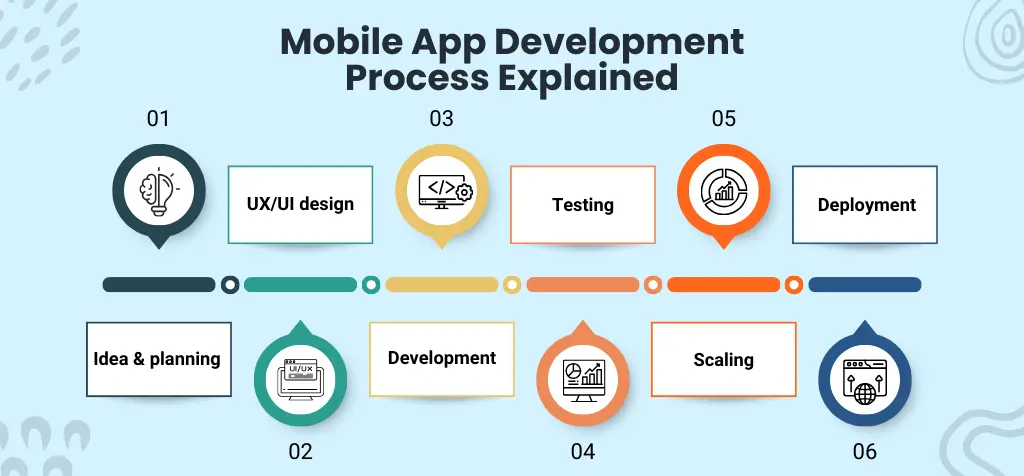
A clear roadmap is required for developing a successful mobile app, from concept to launch. A structured process promotes efficiency and long-term scalability. Here’s a breakdown of the major stages in mobile app development:
Idea & Planning
A clearly defined concept is the starting point of every app that becomes successful. In the business’s idea and planning phase, they set up goals, target audiences, core functionalities, etc. Market analysis and competition studies make sure that the app satisfies users’ existing needs and also provides the business with a measurable value at the same time.
UI/UX Design
The UI/UX design phase focuses on crafting an intuitive and visually appealing interface. User journeys are charted by wireframes and prototypes to guarantee smooth engagement. Including AI-driven insights, such as predictive behavior analysis, improves customization and engagement, therefore generating a more intelligent user experience.
Development
In the development stage, the app’s core functionality is built. Whether it’s iPhone app development or cross-platform solutions, this phase integrates backend systems, APIs, and AI web development features to ensure the app performs efficiently and intelligently.
Scaling
Once the core app is developed, scaling ensures it can handle growing user demand, additional features, and increasing data volumes. Building with scalability in mind guarantees long-term reliability and performance as the app expands.
Testing
Testing verifies that the app is secure, stable, and user-friendly across devices. Combining manual QA with AI-powered testing tools helps detect bugs, performance issues, and usability gaps quickly, ensuring a smooth launch.
Deployment
Finally, deployment brings the app to users through app stores or enterprise distribution platforms. Post-launch monitoring, analytics, and regular updates are crucial to maintain performance, implement improvements, and ensure ongoing user satisfaction.
Read More: A Beginners Guide to iPhone App Development
Types of Mobile App Development Solutions (Native, Hybrid, Cross-Platform & PWA)
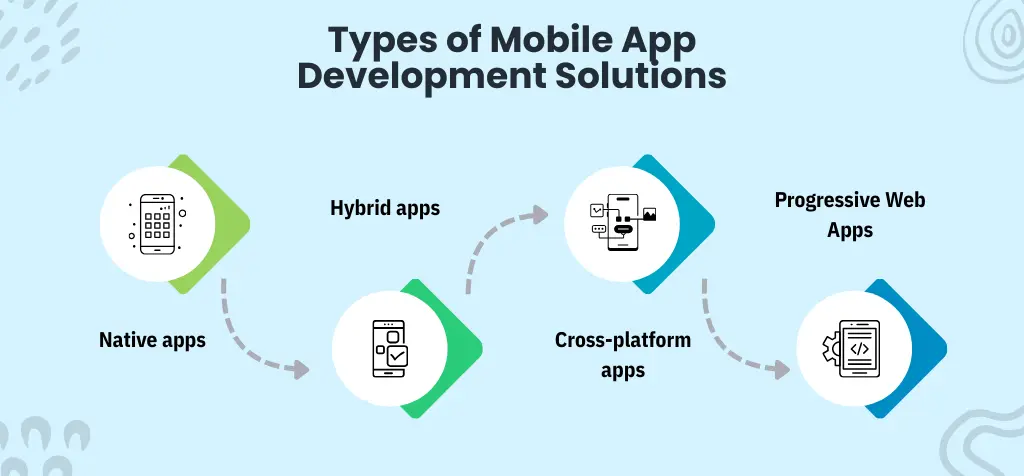
Choosing the right mobile app development solution is crucial for delivering the best user experience, meeting business goals, and optimizing resources. In this mobile app development complete guide, let’s first compare these solutions:
Comparison of Mobile App Development Solutions
| Type | Performance | Cost | Scalability | Time-to-Market |
|---|---|---|---|---|
| Native Apps | Excellent | High | High | Longer |
| Hybrid Apps | Moderate | Moderate | Moderate | Shorter |
| Cross-Platform Apps | Good | Moderate | High | Moderate |
| Progressive Web Apps | Moderate | Low | Moderate | Fast |
Depending on the app’s purpose and budget, businesses can opt for any type of mobile app development. Let’s explore each type in detail:
Native Apps
Native apps are developed specifically for a particular operating system, such as iOS or Android. They are built using platform-specific languages, ensuring optimal performance, smooth UI/UX, and access to device-specific features like cameras, GPS, and sensors.
Hybrid Apps
Hybrid mobile apps combine elements of both web and native apps. They are developed using web technologies like HTML, CSS, and JavaScript, then wrapped in a native container to run across multiple platforms.
Cross-Platform Apps
Cross-platform app development allows developers to build a single app that runs on multiple platforms using frameworks like Flutter application development or React Native. This approach bridges the gap between native performance and hybrid flexibility.
Progressive Web Apps (PWAs)
Progressive Web Apps are web applications designed to function like mobile apps. They run in browsers but can offer offline access, push notifications, and app-like performance.
Read More: How to Build Mobile Apps with Flutter
Mobile App Development Software, Tools & AI Technologies Powering Modern Apps
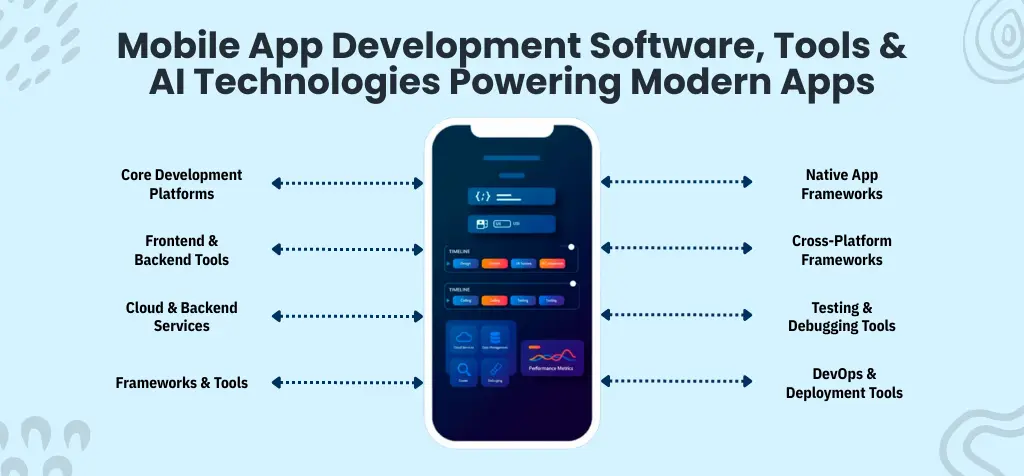
Modern mobile application development uses a mix of powerful software, frameworks, and AI development to offer scalable, intelligent, and user-centered experiences. Developing apps that satisfy business objectives while maximizing performance, usability, and innovation depends on selecting the best mobile app development tool.
Mobile App Development Software
From integrated development environments (IDEs) like Xcode and Android apps to cloud-based platforms, businesses now have access to software that streamlines coding, testing, and deployment. These tools allow developers to efficiently manage projects, collaborate across teams, and maintain high standards of security and performance. Industries like logistics benefit significantly, as apps can optimize route planning, inventory tracking, and real-time communication.
Frameworks & Tools
Frameworks like Flutter, React Native, and Xamarin allow developers to create apps for multiple platforms without having to duplicate their efforts. When combined with libraries, APIs, and automation tools, these frameworks accelerate development while maintaining quality. For Businesses seeking a competitive advantage can reduce time-to-market and increase scalability by leveraging cross-platform capabilities.
Role of AI in Apps
The integration of AI is transforming how apps interact with users and process data. Modern AI app development focuses on three key areas:
- AI-driven workflows and predictive algorithms streamline repetitive tasks, improve operational efficiency, and reduce human error.
- Intelligent algorithms analyze user behavior to deliver customized content, product recommendations, and tailored experiences.
- AI-powered analytics provide actionable insights from user data, helping businesses refine strategies, optimize performance, and anticipate market trends.
Additionally, AI-powered tools such as AI chatbots enhance customer support by providing instant responses and guiding users through complex processes, improving engagement and satisfaction.
Read More: How AI is Revolutionizing Mobile App Development
Custom Mobile Application Development Services vs Off-the-Shelf Solutions

Among the major issues companies face when they start developing a mobile application is whether to buy a ready-made app or invest in a custom mobile application development solution. This mobile app development guide highlights that both methods have benefits, yet understanding their distinctions is essential if you want to maximize return on investment and support long-term growth.
Custom Mobile Application Development Solutions
- Custom Functionality: Each feature is specifically designed for your users, resulting in smoother workflows and increased engagement. This level of personalization is ideal for companies looking to stand out in competitive markets.
- Full Control & Flexibility: With a custom mobile application development solution, businesses maintain full control over updates, integrations, and future enhancements. You can adapt features, add AI capabilities, or optimize performance as your business grows.
- Scalability & Long-Term ROI: Custom apps are designed to scale with your organization. As user demands increase or new business needs arise, these apps can evolve without significant rework.
Off-the-Shelf Solutions
- Faster Deployment: Ready-made apps are quick to implement since they come pre-built with standard features. Businesses can launch faster, which is useful for small projects or testing new ideas in the market.
- Lower Initial Cost: Off-the-shelf solutions require minimal upfront investment, making them appealing for startups or companies with limited budgets. However, the trade-off is limited customization and control.
- Limited Flexibility & Scalability: While off-the-shelf apps provide a quick solution, they often struggle to scale with business growth or adapt to unique workflows.
Hiring Expert Mobile App Developers in USA: What to Look For
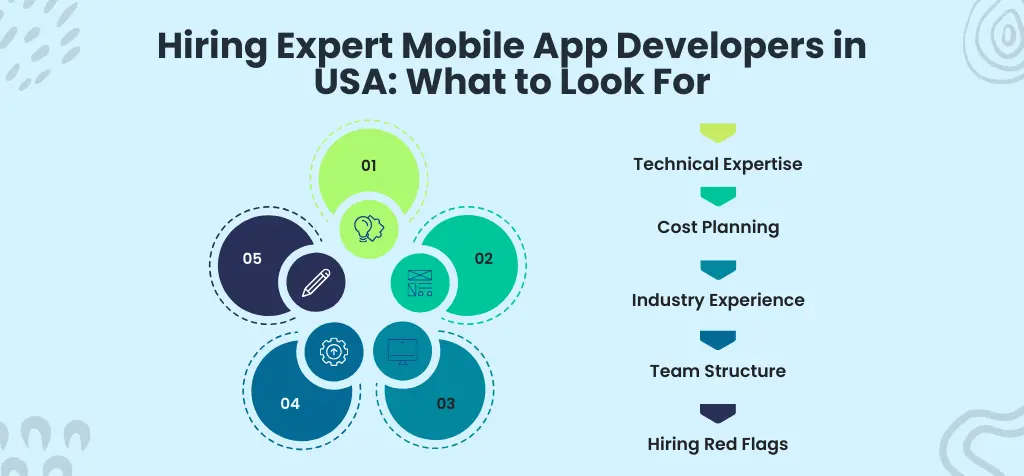
Whether you’re building consumer apps, enterprise solutions, or AI-powered platforms, choosing the right team in the USA ensures your project meets quality, scalability, and business objectives.
Required Skills
Search for experts in native and cross-platform development, the latest frameworks, and ERP and CRM interfaces. Strong, intelligent apps call on iOS and Android platform expertise, API management, and AI capabilities.
Industry Experience
Prior experience in your target industry can dramatically improve app outcomes. Developers familiar with healthcare, logistics, or enterprise operations understand compliance requirements, workflow nuances, and user expectations, making development faster and more effective.
Team Models
According to the size of the project, companies have the option to employ full-time in-house teams, dedicate remote developers, or collaborate with outsourcing companies. Every model presents a different combination of the three factors: control, flexibility, and cost efficiency.
Cost Expectations
Rates for expert developers vary based on experience, location, and project complexity. While hiring in the USA can be more expensive, the investment ensures high-quality output, timely delivery, and reduced long-term maintenance costs.
Red Flags
Be cautious of developers who lack clear portfolios, fail to demonstrate mobile app development expertise, or cannot provide references. Poor communication, unrealistic timelines, or vague technical explanations are also warning signs.
By carefully evaluating skills, experience, and team models, businesses can hire mobile app developers in USA who deliver scalable and feature-rich applications tailored to their needs.
Read More: Top 10 Flutter App Development Companies in USA
Why Choose Diginautical for Mobile App Development Solutions
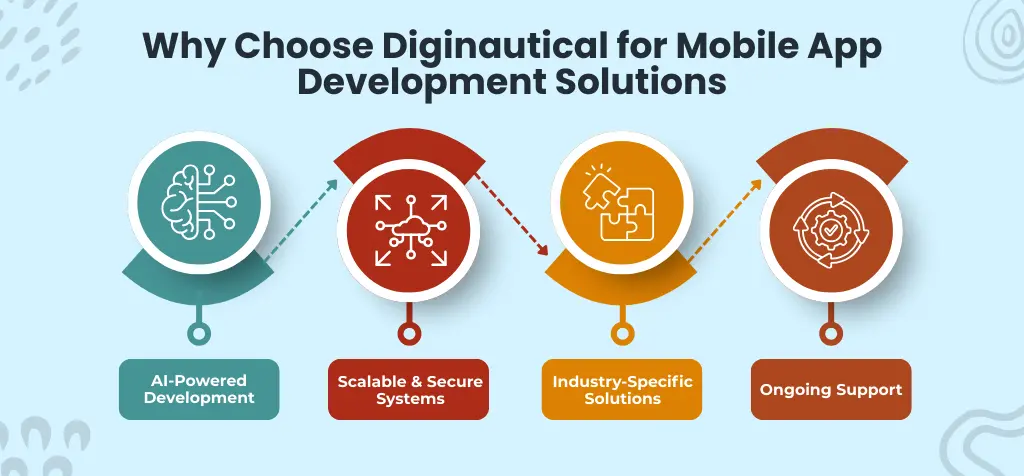
AI-Powered Development
Diginautical utilizes AI in mobile app development to create smart, adaptive, and customized applications. AI features are integrated by us to uplift user experience, workflow automation, and business insight that are timely to keep companies in front of the competition.
Scalable & Secure Systems
Our mobile app development solutions are designed for scalability and security. Whether it’s a startup app or an enterprise platform, Diginautical ensures robust architecture, seamless performance, and protection of sensitive data, so your app grows safely with your business.
Industry-Specific Solutions
We provide custom mobile application development services across multiple industries, including logistics, manufacturing, and automotive. Our apps are designed to address unique business challenges, ensuring relevance, efficiency, and maximum impact.
Ongoing Support
Diginautical offers continuous support and maintenance for all apps we develop. From troubleshooting and updates to scaling features and AI enhancements, our team ensures your mobile solution remains high-performing and future-ready.
Read More: How to Choose the Best Tech Stack for Mobile App Development
Conclusion
Mobile app development in 2026 will be a technology investment that businesses cannot avoid if they want to grow, engage customers, and be efficient in their operations. The rapid surge of smartphone users and the high expectation of smart and tailored experiences are the reasons that are pushing firms to resort to mobile app development solutions that are both AI-powered and scalable to be able to compete.
Choosing the right development partner is critical. By working with a trusted provider like Diginautical, businesses gain access to tailored solutions backed by industry expertise, long-term support, and insights aligned with a proven mobile app development guide.
Frequently Asked Questions
Mobile app development is the process of designing, building, and deploying applications specifically for mobile devices, optimized for performance, usability, and user engagement.
The cost depends on project complexity, features, and platform. Investing in custom mobile application development services ensures a solution tailored to your business needs and long-term goals.
Top mobile app development software includes Xcode, Android Studio, Flutter, and React Native, chosen based on platform, scalability, and project requirements.
The timeline varies with scope and complexity. A reliable mobile app development solution ensures efficient planning, development, testing, and deployment for timely delivery.
Yes. A custom mobile application development solution provides full control, scalability, and long-term ROI, making it ideal for businesses seeking tailored and future-ready apps.