


The surge in mobile shopping has reshaped global commerce, with consumers increasingly relying on smartphones for purchases. The global eCommerce revenue is projected to surpass $6.8 trillion by 2026, highlighting why mobile apps are no longer optional.
Businesses are now prioritizing mobile-first strategies, making understanding ecommerce app development cost critical for planning and investment. Businesses should think about development hours, UI/UX design, third-party integrations, payment gateways, and post-launch maintenance when making apps for the marketplace or fully customized solutions
With custom mobile app development services, companies can invest in scalable solutions that optimize conversions and enhance customer engagement.
A well-planned ecommerce app balances cost, functionality, and growth potential. We help businesses make every dollar count with custom development services. – Mubashir Faiz, CEO at Diginautical
Ecommerce App Development Cost Overview
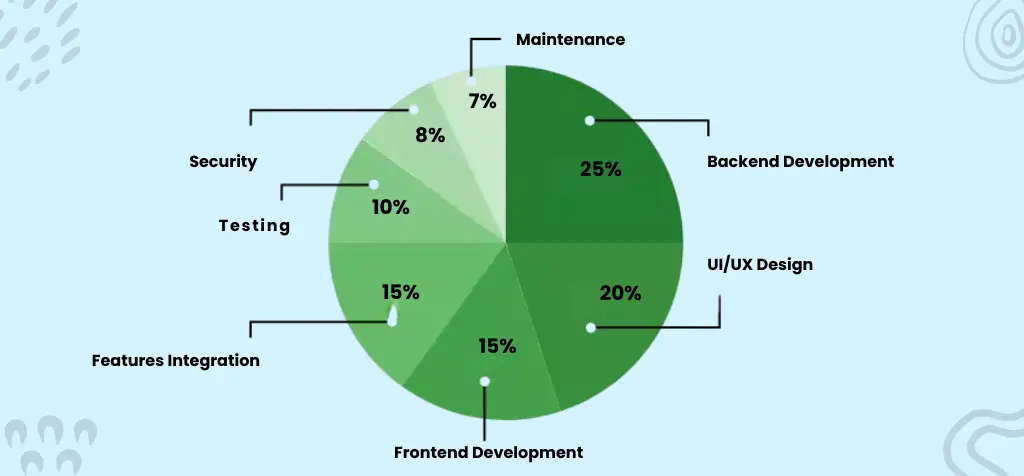
Understanding ecommerce app development cost estimates is essential for businesses planning a mobile commerce strategy. Costs can vary significantly depending on the app’s purpose, target audience, and technical complexity. Businesses looking to launch a successful app must evaluate these factors carefully to determine how much ecommerce app development cost and align investments with ROI expectations.
Feature complexity, UI/UX design, and backend integrations also play major roles in shaping the final ecommerce app development cost breakdown. Companies that partner with an experienced B2B software development company can gain guidance on prioritizing features, selecting platforms, and estimating a realistic budget for both development and ongoing support.
Cost Breakdown by Platform: iOS vs Android vs Cross‑Platform
Here’s a comparative overview of development costs for different approaches:
| Platform Type | US Hourly Rate | Project-Based Estimate | Notes |
|---|---|---|---|
| Native iOS App | $90–$150/hr | $20,000–$60,000+ | Best for Apple users; requires iOS app development services. |
| Native Android App | $80–$140/hr | $18,000–$55,000+ | Covers Android ecosystem; optimized for varied devices. |
| Cross‑Platform / Hybrid App | $70–$130/hr | $15,000–$50,000+ | Single codebase for iOS & Android; reduces development time and cost. |
Native iOS App Cost
Developing a native iOS app involves Apple-specific coding, rigorous UI/UX standards, and device optimization. This approach ensures performance, seamless updates, and higher retention among iPhone and iPad users.
Native Android App Cost
Android apps require multi-device testing, API integration, and custom interface adjustments. Using Android app development services ensures compatibility across phones, tablets, and varied OS versions efficiently.
Cross-Platform / Hybrid App Cost
Hybrid development saves time and cost with a single codebase for iOS and Android. Ideal for startups and small businesses, it balances performance, speed, and scalability using cross-platform app development tools.
Read More: ECommerce App Development Cost Your Complete Guide
Typical Ecommerce App Development Pricing Tiers
Knowing how much it costs to develop an ecommerce mobile app for different types of projects helps businesses make good budget plans and choose the best time to hire mobile app developers for the best results.
| App Type | Features Included | Estimated Cost (USD) | Ideal For |
|---|---|---|---|
| MVP / Starter Ecommerce App | Basic product listings, cart, payment integration, simple UI/UX | $5,000 – $20,000 | Startups, small businesses, B2C |
| Mid-Level Feature Ecommerce App | User accounts, analytics dashboards, push notifications, enhanced UI/UX | $20,000 – $50,000 | Growing B2B or B2C platforms |
| Enterprise Ecommerce App | Multi-vendor support, ERP/CRM integrations, cloud solutions, high security & scalability | $50,000+ | Large enterprises, complex marketplaces |
MVP / Starter Ecommerce App
A simple ecommerce app costs for startups or small businesses range from $5,000 to $5,000–$20,000. Ideal for validating ideas, these apps include basic product listings, a cart, and payment features, often suitable for B2C or small-scale healthcare software development company solutions.
Mid‑Level Feature Ecommerce App
Mid-tier apps cost around $20,000–$50,000, offering advanced features like user accounts, analytics dashboards, push notifications, and enhanced UI/UX design. Perfect for growing B2B or B2C platforms needing scalable custom mobile app development services.
Enterprise Ecommerce App
The cost of developing a high-end enterprise ecommerce app starts at $50,000 and goes up from there. These apps can handle complex workflows, multi-vendor marketplaces, and connections to ERP development, CRM, and cloud solutions. Big companies can use full-featured apps that are secure, compliant, and can grow with them.
Feature-Based Ecommerce App Cost Drivers
Understanding how individual features impact your ecommerce app development cost helps in accurate budgeting and prioritizing functionality. Each component, from design to integrations, carries its own complexity and development time.
User Authentication & Accounts
Secure account creation, login, and profile management form the backbone of any ecommerce app. Complexity increases with multi-factor authentication, social logins, or enterprise-level user roles, influencing feature-based ecommerce app cost.
UI/UX Design for Ecommerce Apps
Intuitive, responsive, and mobile-friendly design drives user engagement. Custom layouts, interactive elements, and ecommerce web development best practices elevate development effort and pricing tiers.
Product Catalog & Filtering
Organizing products with categories, filters, and search functionality ensures smooth navigation. The more advanced the filtering options, the higher the development cost due to feature complexity.
Shopping Cart & Checkout Flows
Streamlined cart management, multi-step checkouts, and saved payment options require careful design and security measures, directly affecting secure ecommerce app development and project estimates.
Payment Gateway Integration
Integrating PayPal, Stripe, Apple Pay, or local gateways involves compliance, encryption, and testing. Each gateway adds to ecommerce app pricing tiers and overall development investment.
Order Tracking & Push Notifications
Real-time updates, shipment tracking, and personalized notifications improve user experience. Implementing these systems can increase the feature-based ecommerce app complexity and ongoing maintenance needs, especially in hybrid mobile app development projects
Loyalty/Rewards Systems
Points, coupons, and reward mechanisms encourage repeat purchases. The complexity of rules and integration with backend systems impacts ecommerce app development cost estimates.
Analytics & Reporting
Dashboards for sales, user behavior, and conversions help you make smart choices. Advanced analytics and custom reporting modules make ecommerce apps more expensive and require more technical work.
Read More: Top 10 Web Development Companies in the USA
Hourly vs Project‑Based Pricing Models
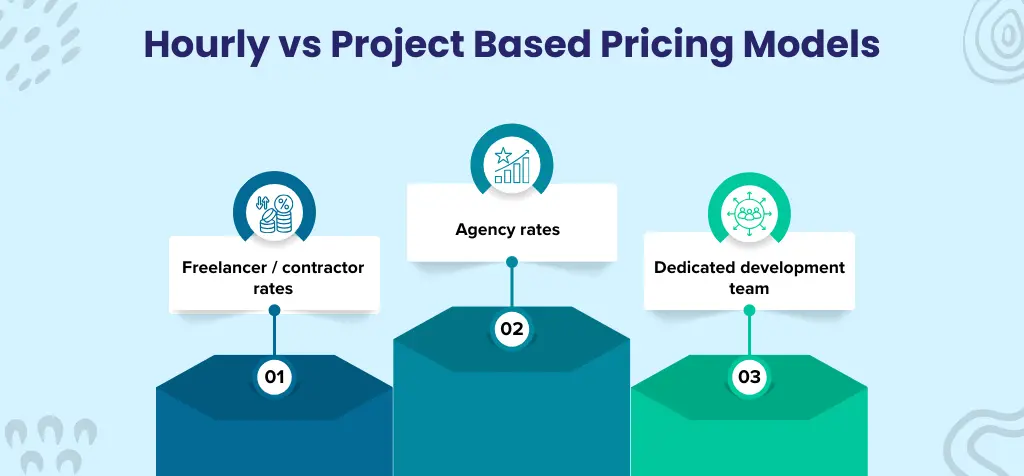
When planning your ecommerce app, understanding pricing models is key. Businesses can opt for hourly engagements or fixed project-based pricing depending on scope, flexibility, and budget considerations.
Pricing Comparison Table
| Pricing Model | Average Rate / Cost | Pros | Cons | Ideal For |
|---|---|---|---|---|
| Hourly | $30–$150/hr | Flexible, scalable, pay-as-you-go | Costs can increase if scope expands | Startups, iterative projects, ongoing updates |
| Project-Based | $5,000 – $200,000+ | Cost predictability, clear milestones | Less flexible if requirements change | Enterprises, well-defined apps, fixed deliverables |
| Dedicated Team | $50–$150/hr (team-based) | High-quality, full control, scalable | Higher upfront cost | Large-scale or complex ecommerce apps |
Hourly Pricing
Hourly pricing offers flexibility for evolving projects. Freelance mobile app developers may charge $30–$80/hr, while agencies and dedicated teams typically range from $50 to $150/hr. Ideal for iterative development, feature additions, and continuous support.
Project-Based Pricing
Fixed project pricing suits well-defined projects with clear deliverables. It provides cost predictability and aligns with milestones. Agencies or B2B software development companies often provide estimates upfront, covering design, development, and QA.
Choosing the Right Model
Freelancers are budget-friendly for small projects, agencies balance quality and scalability, and dedicated teams suit enterprise-level apps. Consider project complexity, timeline, and ongoing support needs.
Hidden Costs in Ecommerce App Development
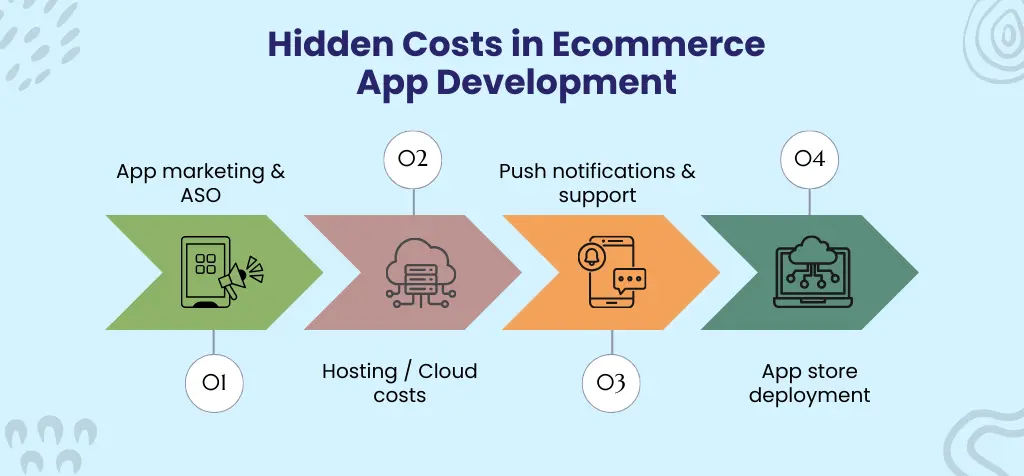
There is more to making an ecommerce app than just writing code. To keep their businesses running smoothly and get a good return on investment, entrepreneurs need to keep spending money on marketing, cloud infrastructure, testing, and support after the launch.
App Marketing & ASO
Promoting your app through app store optimization, social media marketing, and paid ads ensures visibility, downloads, and engagement. Neglecting marketing can significantly reduce the app’s performance and revenue potential.
Hosting & Cloud Costs
Reliable hosting and cloud infrastructure are essential for app speed, scalability, and uptime. Expenses vary depending on server requirements, traffic volume, and whether enterprise cloud solutions are implemented.
Push Notifications & Customer Support
Maintaining customer engagement through push notifications, chat support, and feedback systems adds to operational costs. These features enhance retention and user experience but require ongoing maintenance.
App Store Deployment & Updates
Publishing apps on platforms like Google Play and the Apple Store, handling updates, and complying with platform guidelines incur fees and developer time, which must be considered in software maintenance and support costs after launch.
Testing & Quality Assurance
Thorough QA, cross-platform testing, and bug fixing are essential to avoid user churn. Incorporating ecommerce app testing and QA services ensures reliability and a smooth user experience while managing potential hidden costs.
Backend Maintenance & Security
Securing user data, integrating iOS app development services, and maintaining backend systems require continuous monitoring and updates to prevent security breaches and downtime, contributing to long-term operational costs.
How to Reduce Ecommerce App Development Cost
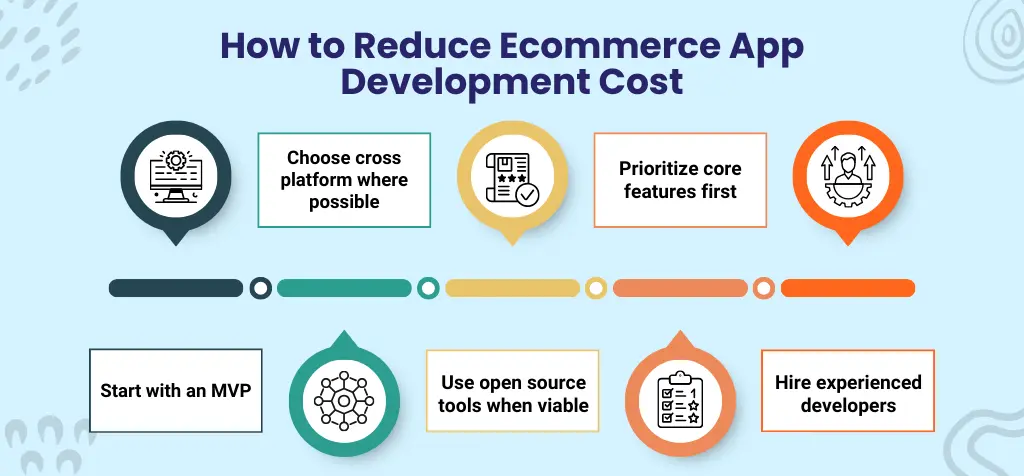
Start with an MVP
Begin with a minimum viable product to test core functionality and market demand. Focusing on essentials reduces upfront expenses and aligns with low-investment tech startup ideas for smarter budgeting.
Choose Cross-Platform Where Possible
Opt for ecommerce app cost comparison, native vs cross-platform, to target multiple platforms with a single codebase. This approach saves time and money while maintaining a consistent user experience across iOS and Android.
Use Open-Source Tools When Viable
Use free frameworks, libraries, and web development services tools to save money on software licenses. Open-source solutions let you quickly build your ecommerce mobile apps without sacrificing quality or the ability to grow.
Prioritize Core Features First
Focus on must-have functionalities before adding advanced features. This strategy helps reduce complexity, manage ecommerce mobile app costs efficiently, and allows iterative upgrades based on user feedback.
Hire Experienced Developers
Invest in skilled developers to avoid rework, bugs, and delays. Professionals streamline development, optimize resources, and ensure cost-effective “how to start web development as a beginner” when building robust ecommerce apps.
Read More: How to Make an eCommerce Mobile App for Android or iOS
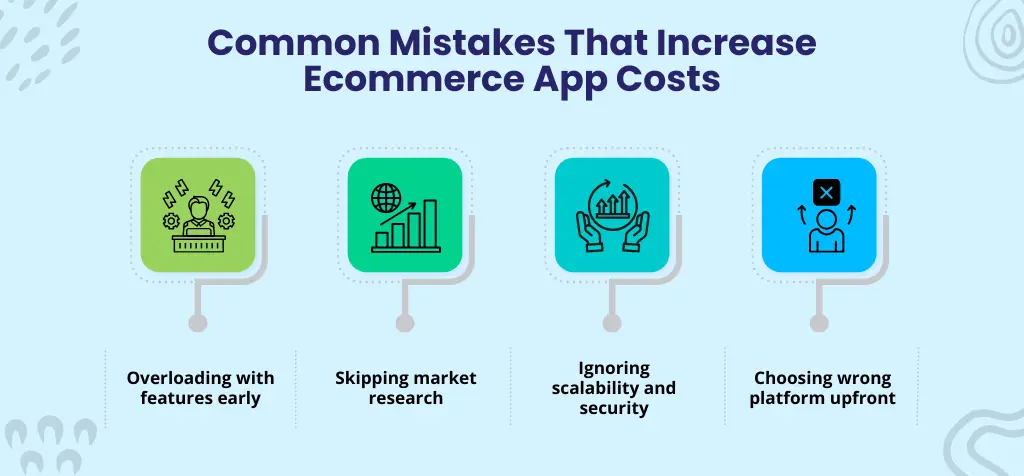
Common Mistakes That Increase Ecommerce App Costs
Following a structured ecommerce app development guide ensures beginners and enterprises alike avoid unnecessary expenses while building scalable, secure, and user-friendly apps.
Overloading with Features Early
Adding too many features at launch can inflate budgets and complicate development. Focus on an MVP first, then scale functionality gradually. Following a beginner-friendly web development tutorial helps prioritize essential features efficiently.
Skipping Market Research
Neglecting research into the target audience, competitors, and market trends leads to costly redesigns and poor engagement. Proper planning ensures the app meets user needs and reduces unexpected ecommerce app development cost.
Ignoring Scalability and Security
Apps that aren’t built for growth or secure data handling face higher maintenance and remediation costs. Enterprises like finance software development companies and automotive software development companies must prioritize robust, scalable architectures.
Choosing the Wrong Platform Upfront
Choosing the wrong platform, whether it’s native vs hybrid vs cross-platform development, can make the cost of redevelopment go up. When you hire mobile app developers, you should talk to experts to make sure the platform you choose fits with your business goals and can grow over time.
Read More: 15 Useful Tips for a Successful Mobile Application
Why Choose Diginautical for Your Ecommerce App
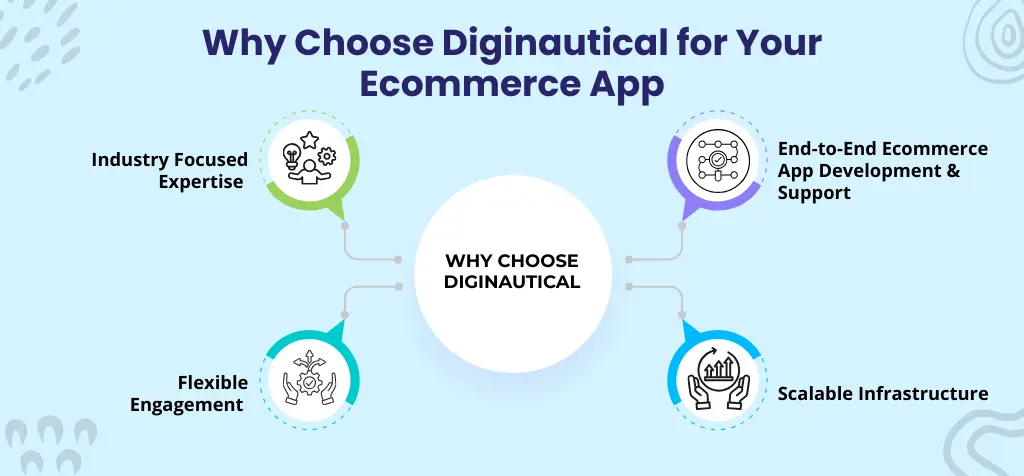
Diginautical is a trusted partner for businesses that need ecommerce app development and custom mobile app development services in USA. They provide digital solutions that are scalable, reliable, and high-performance.
Industry-Focused Expertise
We provide specialized ecommerce software development company services for healthcare, retail, B2B, and enterprise sectors, ensuring apps meet industry standards, regulatory compliance, and tailored functionality for maximum impact.
End-to-End Ecommerce App Development & Support
From UI/UX design and development to post-launch maintenance, we offer full lifecycle solutions. Our team ensures smooth deployment, continuous updates, and optimized performance across web, iOS, and Android platforms.
Flexible Engagement
Hire custom software developers on-site, remotely, or via hybrid models. This flexible approach adapts to your project’s scale, budget, and timeline while maintaining consistent quality and seamless communication.
Scalable Infrastructure
We use cloud solutions, API integration, analytics tools, and secure backend systems to make sure that your ecommerce app can grow with your business, handle a lot of traffic, and meet the changing needs of your business.
Read More: Why Businesses Choose Diginautical’s Web Development Solutions to Launch Faster
Final Thoughts
It’s important to know how much it will cost to develop an ecommerce app to plan a successful project. The overall investment is directly affected by things like the choice of platform, the complexity of features, backend integrations, and support after launch. When you work with Diginautical, you get access to expert custom mobile app development services and full ecommerce app development services.
Frequently Asked Questions
Costs vary by complexity and platform, ranging from $5,000–$20,000 for simple apps to $50,000+ for enterprise-level solutions.
Native apps (iOS/Android) generally cost more due to separate coding, while cross-platform apps save development time and reduce expenses without compromising performance.
Hourly rates range from $50–$150+, depending on experience and project scale. Hiring dedicated developers ensures quality, scalability, and faster delivery.
Typically, mobile apps are more cost-effective for targeted customer engagement, while web portals require broader backend integrations and infrastructure, raising overall expenses.
Professional services like Diginautical offer ongoing software maintenance and support, including updates, bug fixes, security, and performance monitoring to keep apps running smoothly.