

As consumers increasingly rely on mobile solutions for everyday needs, the global grocery delivery app market is projected to grow rapidly, with revenues expected to expand from $15.5 billion in 2025 to $45 billion by 2035 at an 11.2 % CAGR, reflecting strong demand and long‑term opportunity for digital platforms.
To reach the most people, businesses need to optimize their custom mobile app development services across all of these platforms. The goal is still the same: to provide fast, easy, and dependable grocery shopping experiences that meet the needs of consumers in 2026 and beyond, whether through native solutions or hybrid frameworks.
Custom grocery app development services allow businesses to deliver personalized experiences across platforms, maximizing reach and engagement. – Syed Irtiza Ali, Brand Manager at Diginautical
What is Grocery Delivery App Development?
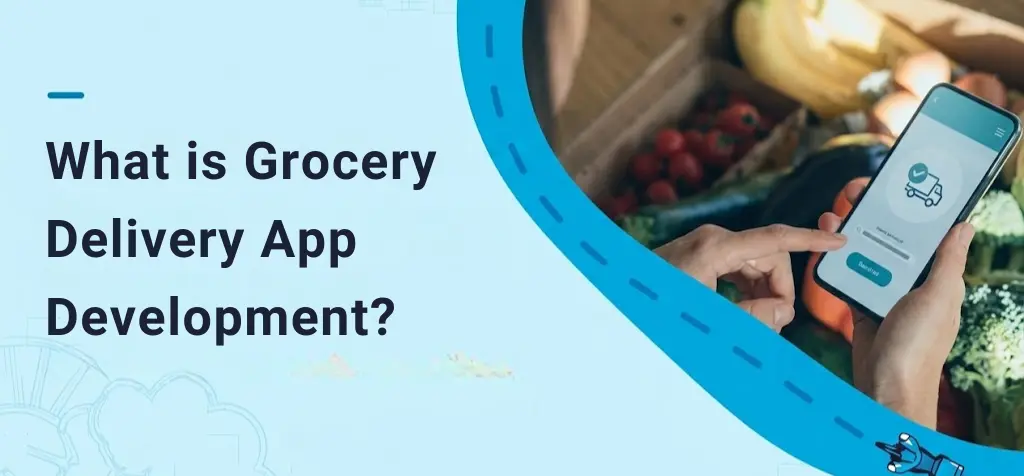
Grocery delivery mobile app development is different from regular e-commerce because it focuses on real-time inventory management, fast delivery, and personalized shopping experiences. This makes things easier for both customers and stores.
Businesses that want to reach both iOS and Android users can also use iOS app development services along with cross-platform strategies to make sure they reach as many people as possible and that their apps work the same on all devices.
There are several models businesses can adopt based on their operational needs:
Marketplace Apps: These platforms connect multiple grocery stores with customers, providing a wide selection of products and flexible delivery options. They are ideal for regions with numerous vendors and high consumer demand.
Single-Store Apps: Tailored for individual grocery stores, these apps allow businesses to maintain brand identity while providing efficient ordering and delivery solutions.
Hybrid Apps: Combining the reach of marketplaces with the customization of single-store apps, hybrid apps offer flexibility and scalability, making them suitable for expanding businesses.
Read More: Step-by-Step Guide – Mobile App Development Process for Businesses
Key Features of a Successful Grocery Shopping and Delivery App
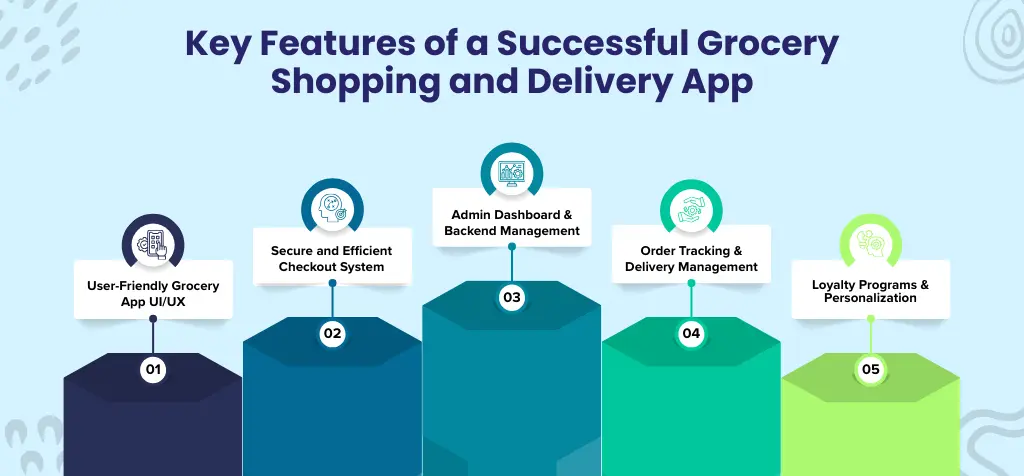
To build a platform that works well and can grow, it needs the following features.
User-Friendly Grocery App UI/UX
A seamless interface is critical for retaining customers. Adhering to grocery app UI/UX design best practices ensures intuitive navigation, easy product discovery, and smooth checkout. Incorporating UI/UX design for mobile apps and mobile-first design enhances accessibility and usability across devices.
Secure and Efficient Checkout System
Checkout is the final conversion point, making security paramount. Apps must integrate encrypted payment gateways, digital wallets, and app security & encryption standards. Mobile backend & API integration ensures real-time transaction processing and can connect with ERP development services for streamlined operations.
Real-Time Order Tracking & Delivery Management
Transparency builds trust. Features such as GPS-based tracking, automated delivery notifications, and last-mile delivery app features allow users to monitor orders effortlessly. Partnering with a logistics software development company ensures efficient route planning and reliable delivery management.
Admin Dashboard & Backend Management
A powerful backend drives operational efficiency. Grocery app backend development includes inventory control, order management, and analytics dashboards. Custom backend development tailored to business workflows, combined with enterprise app solutions and Android app development, supports large-scale operations.
Loyalty Programs & Personalization
Personalized experiences make people more likely to stay and get involved. AI-based suggestions, targeted promotions, and B2B/ecommerce features that work together all help keep customers coming back. Well-designed app features and functions help customers place repeat orders and build stronger relationships with the business, which helps it grow.
Read More: How to Hire the Right Mobile App Developers for Your Project
Grocery App Development Process: Step by Step
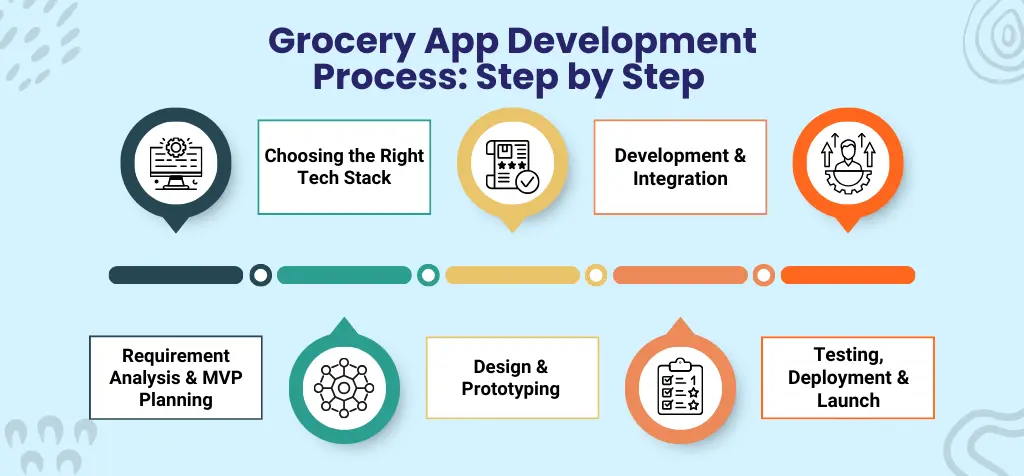
Developing a successful grocery food delivery app requires a structured approach that balances business goals, user experience, and technical scalability. From planning to launch, each stage is critical for creating a robust and efficient platform.
Requirement Analysis & MVP Planning
Strategic planning lays the foundation for success. Startups can adopt an MVP grocery app strategy for startups by identifying essential features such as product catalog, cart, checkout, and basic delivery tracking for the first launch, ensuring faster market entry and early feedback.
Choosing the Right Tech Stack
Selecting the correct technology is key to performance and scalability. Businesses can choose between native vs hybrid mobile app development, leveraging frameworks like React Native app development or Flutter app development for cross-platform compatibility, optimizing both iOS and Android performance.
Design & Prototyping
User experience drives adoption. Applying UI/UX design for mobile apps principles, developers create wireframes, mockups, and prototypes that follow grocery app UI/UX design best practices, ensuring intuitive navigation, seamless interactions, and visually appealing interfaces.
Development & Integration
The development phase connects design with functionality. Frontend and backend coding is complemented by third-party API integration for payment gateways, mapping, and notifications, along with PMS/CRM integration for apps to synchronize orders, inventory, and customer data.
Testing, Deployment & Launch
Before they are released, apps go through a lot of quality assurance (QA), bug fixes, and beta testing to make sure they work. A clear plan for deploying and launching a grocery app, along with regular software maintenance and support, ensures that the app runs smoothly, users are happy, and the platform lasts a long time.
Read More: How to Make an eCommerce Mobile App for Android or iOS
Industry Applications and Market Opportunities for Food Mobile Apps
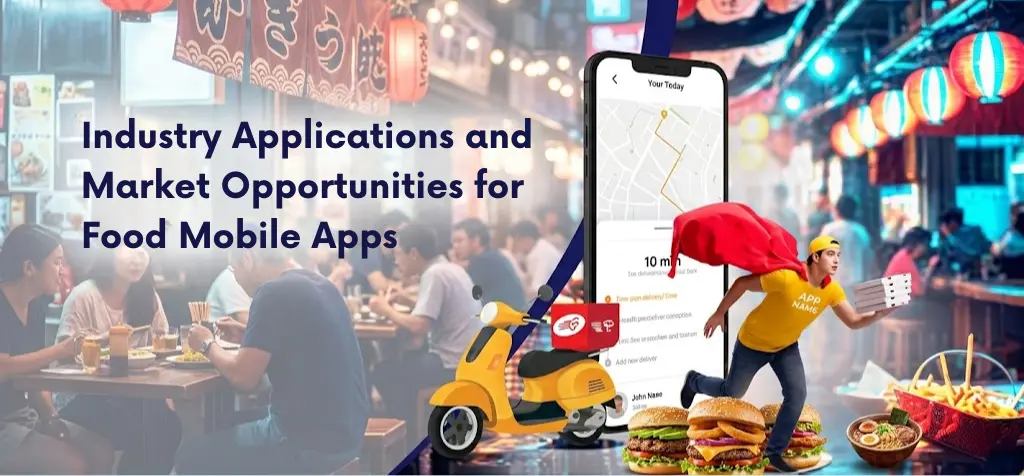
The rise of food delivery apps and grocery delivery marketplaces has transformed how consumers access essential goods. Businesses in this sector benefit from increased order frequency, expanded customer reach, and the ability to provide personalized shopping experiences. For ecommerce software development companies and food software development companies, these trends represent a significant opportunity to deliver tailored solutions that optimize order management, logistics, and user engagement.
Telehealth & grocery tech convergence allows integration of dietary recommendations, prescription-based deliveries, and health tracking, while opportunities for healthcare software development companies expand into meal planning, nutrition management, and on-demand delivery of health-oriented products.
Key opportunities and applications include:
- Real-time order tracking and delivery optimization
- Multi-store marketplaces connecting vendors and consumers
- Personalized recommendations based on purchase history
- Loyalty programs and subscription-based services
- Integration with existing inventory and payment systems
- Scalable platforms that grow with increasing order volume
- Analytics-driven insights to optimize operations and user engagement
Tips for a Successful Grocery Delivery App
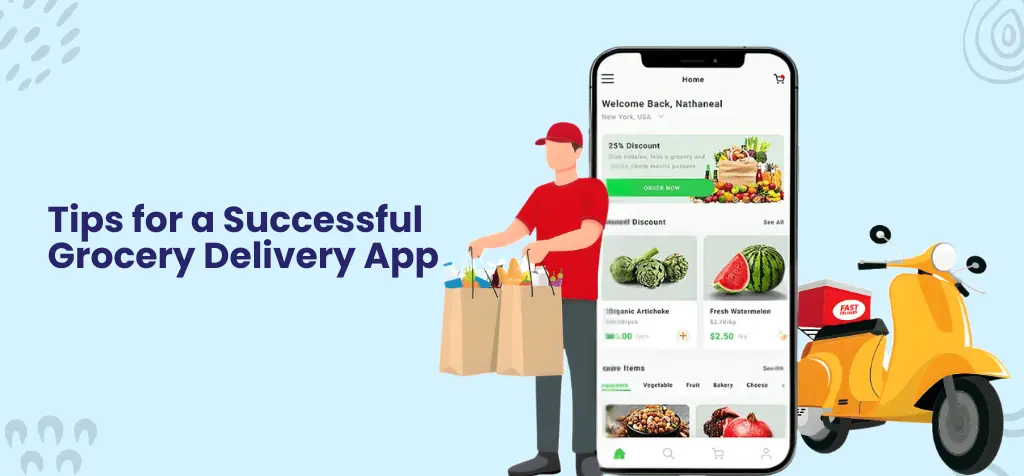
By focusing on engagement and reliability, businesses can ensure their grocery shopping and delivery app development drives retention and revenue.
Prioritize Features That Engage Users
Adding features to grocery apps that keep users engaged, such as personalized suggestions, loyalty programs, push notifications, and easy reordering, keeps customers coming back and encourages them to order more often, whether they are new or returning users.
Optimize Performance and Scalability
Fast load times, smooth navigation, and app performance optimization are critical for retaining users during peak hours. Scalable architecture ensures that the platform can handle growing traffic and a larger product catalog without disruptions.
Focus on Security and Compliance
Secure payment gateways, data encryption, and robust authentication protocols protect customer information. Strong security measures instill trust and are essential for a professional grocery delivery experience.
Professional Mobile App Development Services
Partnering with experienced mobile app development services ensures timely updates, bug fixes, and the integration of new features. This proactive approach maintains app relevance and functionality in a competitive market.
Hire Skilled Developers for Long-Term Success
Engaging hire mobile app developers who understand cross-platform solutions, backend integration, and UX design ensures the app is robust, maintainable, and future-proof, supporting both business growth and customer satisfaction.
Read More: How to Build Mobile Apps with Flutter
Why Choose Diginautical for Grocery App Development
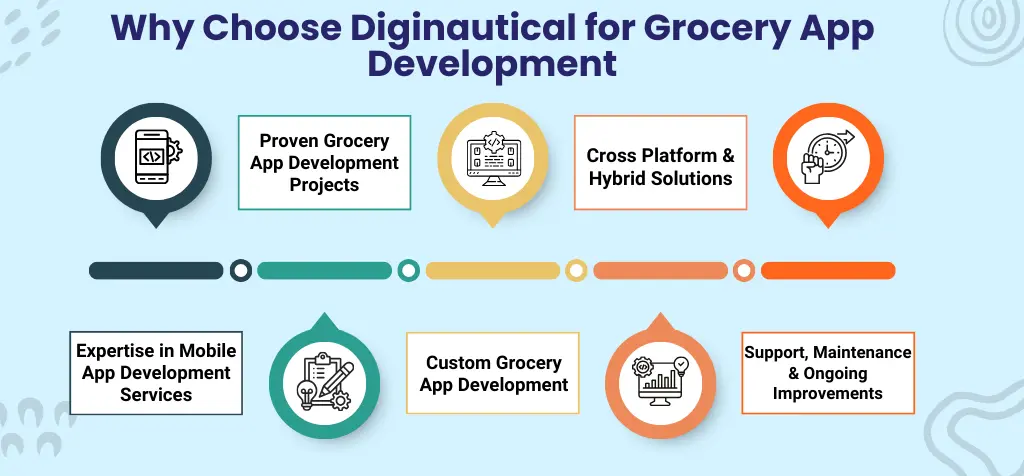
If you work with the right technology provider, your grocery app will be scalable, reliable, and easy to use. Diginautical uses its knowledge of the industry and new ideas to get great results at every stage of app development.
Expertise in Mobile App Development Services
With a strong focus on professional mobile app development services, Diginautical builds apps that are fast, intuitive, and reliable. Our team ensures smooth navigation, seamless transactions, and feature-rich experiences tailored for grocery delivery platforms.
Proven Grocery App Development Projects
We have successfully delivered multiple grocery shopping app development solutions, from single-store apps to multi-vendor marketplaces, ensuring timely deployment, operational efficiency, and enhanced customer engagement for businesses of all sizes.
Custom Grocery App Development
Our custom grocery app development services provide end-to-end solutions tailored to unique business needs, including subscription models, loyalty programs, advanced analytics, and integration with existing backend systems for seamless operations.
Cross-Platform & Hybrid Solutions
Diginautical uses cross-platform app development and hybrid mobile app development to make sure that apps reach a wider audience. They do this by making sure that the apps work well on both iOS and Android devices and that they are always fast and efficient.
Support, Maintenance & Ongoing Improvements
We offer opportunities to hire mobile app developers and provide comprehensive app maintenance & support, including updates, performance optimization, and feature enhancements, ensuring your grocery app remains secure, reliable, and competitive post-launch.
Read More: How to Choose the Best Tech Stack for Mobile App Development
Final Thoughts
Custom grocery application development services enable businesses to develop specific solutions, which include loyalty programs and subscription services and real-time inventory tracking capabilities.
To transform your grocery business and meet evolving consumer expectations, hire mobile app developers with Diginautical to launch a scalable, secure, and user-friendly grocery delivery app today, and take your digital presence to the next level.
Frequently Asked Questions
Yes, custom features, loyalty programs, and fast delivery can make a single-store app highly competitive.
Consider budget, speed, and device reach; hybrid apps maximize reach, while native apps excel in performance.
Absolutely, predictable revenue and customer retention make it effective even for niche grocery stores.
Payment gateways, inventory systems, CRM/PMS, and real-time tracking ensure smooth operations.
Regular updates every 2–3 months for features, performance optimization, and security maintain a competitive edge.