


The global software development market reflects this shift. According to industry reports, the market is projected to grow at an 8.4% CAGR through 2030, driven by the increasing adoption of cloud platforms, mobile applications, and enterprise solutions.
Almost everything that happens in a modern business, from dealing with customers to running the business more efficiently, is powered by software. However, many businesses have trouble keeping up with digital transformation because they don’t have enough skilled workers, the cost of development is going up, and they need people with specific skills. This reality has decided for in-house software development and outsourcing software development, a very important strategic choice for companies that want to be flexible and save money.
The right software development strategy balances control, expertise, and scalability, whether in-house, outsourced, or a hybrid approach. – Syed Irtiza Ali, Brand Manager, Diginautical
Companies need to know the pros and cons of developing software in-house versus outsourcing it when they are deciding whether to build or buy it. Using custom software development services makes sure that your strategy will work and last for a long time.
What Is Outsourcing Software Development?

When you outsource software development, you work with outside companies or specialized teams to do some or all of a software project. Companies work with experienced vendors instead of just using their own resources to get technical help, lower overhead costs, and speed up project timelines. More and more businesses are outsourcing work because they don’t have enough skilled workers, their budgets are tight, or they need to grow quickly.
Businesses often hire software development companies in Washington, DC, to make mobile apps, enterprise software, or ERP solutions that align with their business objectives, ensuring that projects are delivered on time and within budget. Outsourcing also lets companies use the best practices in project management, quality assurance, and development methods, which can make software more reliable and new.
Common Outsourcing Models
Organizations can choose from several outsourcing models based on project requirements, budget, and collaboration preferences.
- The vendor handles the entire project from planning to deployment with clearly defined deliverables and timelines.
- A team of developers works exclusively on your project, integrating with your internal processes and offering flexibility for scaling.
- External developers are added to existing teams to fill skill gaps or manage workload peaks without permanent hiring commitments.
Understanding In-House Software Development
In-house software development means that a company’s own developers, engineers, and project managers build, maintain, and manage software. Companies that use this method keep full control over the development process, including design decisions, coding standards, and deployment schedules. Businesses can make sure that their software works well with their internal processes, company culture, and long-term goals by using in-house teams.
Building software internally allows organizations to cultivate a dedicated team of experts, including custom software developers who understand the company’s products, systems, and customer requirements intimately. This deep domain knowledge can be invaluable for projects such as ERP development services, internal analytics platforms, or hybrid mobile apps that require seamless integration with existing business processes. In-house teams can respond quickly to urgent issues, iterate on features based on internal feedback, and maintain complete ownership of intellectual property.
Benefits of In-House Software Development
- Complete control over software architecture, design, and development timelines
- Deep organizational knowledge leading to tailored, efficient solutions
- Immediate access to developers for urgent fixes or iterative improvements
- Full ownership of intellectual property and internal workflows
- Seamless integration with existing internal systems and processes
Pros and Cons – In-House vs Outsourcing
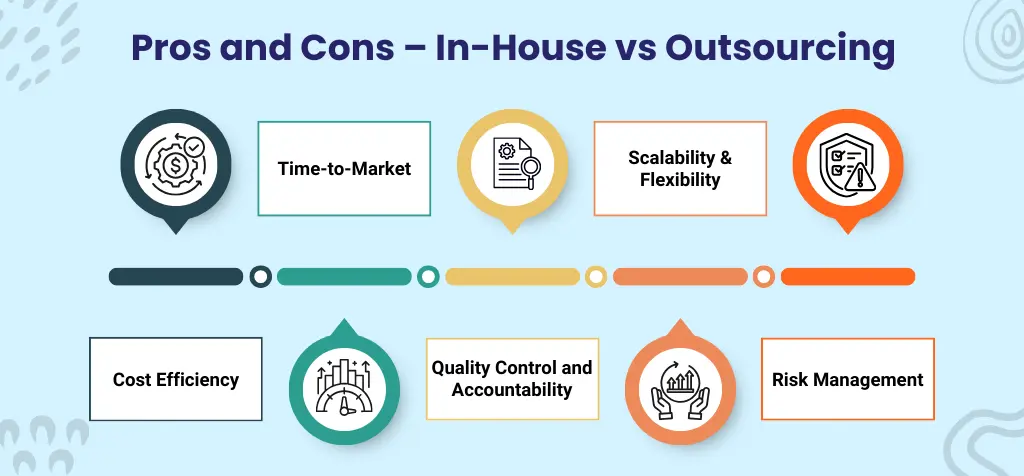
Choosing between in‑house software development and outsourcing software development requires careful evaluation of business priorities, project complexity, and resource availability.
Cost Efficiency
Outsourcing often reduces overhead costs, avoiding recruitment, training, and infrastructure expenses. In-house teams offer control but may incur higher long-term costs, especially for specialized projects like CRM development services or large-scale platforms built by an ecommerce software development company.
Time-to-Market
Remote and outsourced teams can accelerate project delivery through scalable resources. In-house teams may face slower timelines due to limited staff and internal approval cycles, impacting product launches and competitive positioning.
Quality Control and Accountability
Internal teams provide direct oversight, ensuring adherence to organizational standards. Outsourced teams may vary in quality, but structured partnerships and clear SLAs help maintain accountability across development phases.
Scalability & Flexibility
Outsourcing offers rapid scaling for short-term projects or diverse technical needs. In-house teams provide consistency but may struggle to expand quickly without extensive hiring and onboarding.
Risk Management
In-house development gives full control over sensitive data and IP, minimizing compliance risks. Outsourcing introduces dependency on external vendors, requiring careful evaluation of security, contractual obligations, and regulatory compliance.
Key Benefits of Outsourcing Software Development
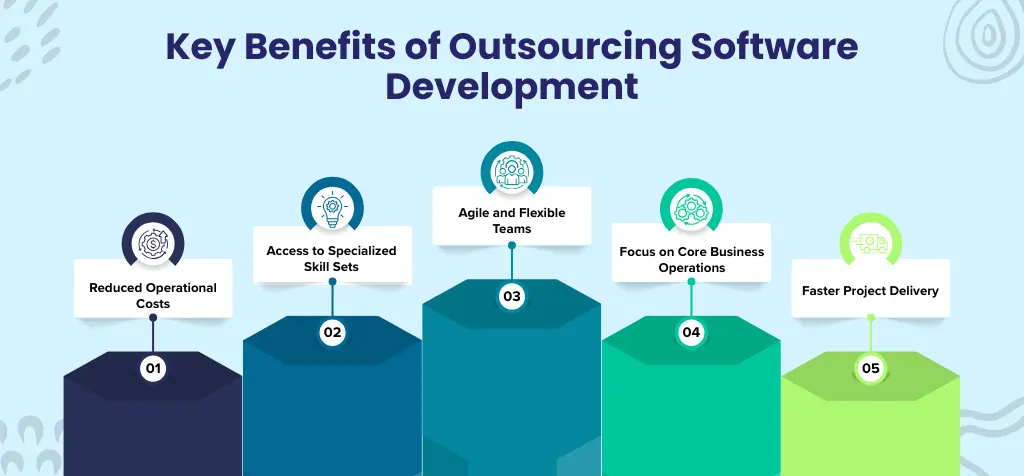
Outsourcing software projects has become a strategic choice for businesses looking to scale efficiently without the overhead of maintaining large internal teams. By using outside experts, businesses can improve their own software development work while also getting access to global talent, cheaper solutions, and faster delivery times.
Reduced Operational Costs
Partnering with a trusted provider allows companies to minimize recruitment, infrastructure, and maintenance expenses. Engaging an external team for outsourcing software development reduces overhead while ensuring projects are staffed with experienced developers, making it a cost-efficient alternative to expanding in-house teams.
Access to Specialized Skill Sets
Outsourcing enables businesses to tap into niche expertise for complex projects, such as custom mobile app development services or industry-specific solutions like those offered by a healthcare software development company. Teams bring specialized knowledge without long-term hiring commitments.
Agile and Flexible Teams
External teams provide flexibility to scale resources up or down based on project needs. This agile approach ensures that organizations can respond quickly to market changes, deliver features faster, and optimize development cycles without overloading internal staff.
Focus on Core Business Operations
By delegating development tasks to a reliable hire software developer, businesses can concentrate on strategic initiatives, revenue growth, and client engagement while the external team handles technical execution and project delivery efficiently.
Faster Project Delivery
Outsourcing speeds up time to market by using established workflows, experienced developers, and teams that work on multiple projects at once. Companies can get a competitive edge by completing projects like custom software development or mobile apps faster than if they only used their own resources.
Challenges of Software Development Outsourcing
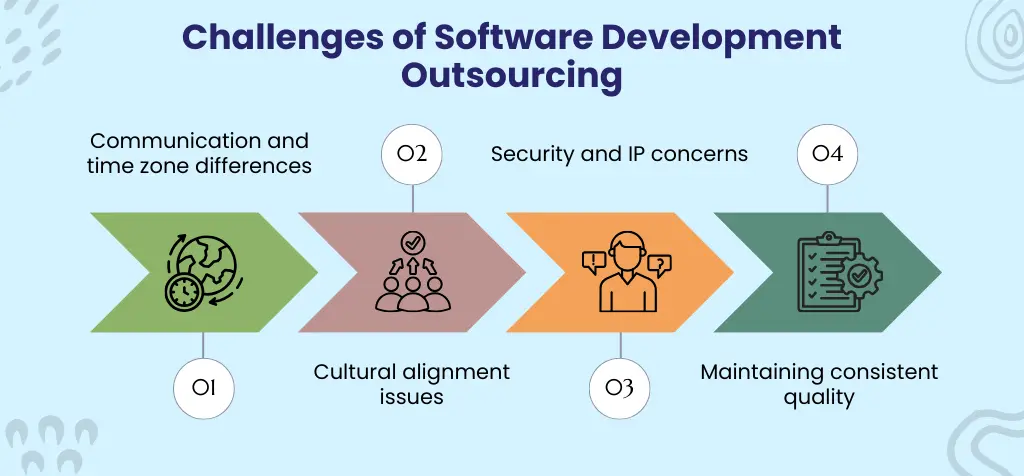
Companies must carefully manage expectations, team collaboration, and quality standards when working with remote or offshore partners, especially for complex projects like CRM development services or mobile app development.
Communication and Time Zone Differences
Coordinating across multiple time zones can delay project updates and decision-making. Clear scheduling, frequent check-ins, and effective project management are crucial to ensure remote teams stay aligned with business goals.
Cultural Alignment Issues
Differences in work culture, communication styles, and business practices may impact collaboration. Investing time in team onboarding and understanding cultural nuances helps mitigate misunderstandings and improve productivity.
Security and IP Concerns
When you outsource, you give away private information and business processes. When you use custom software development services or hire mobile app developers in Florida, it’s important to choose trustworthy partners and follow strict security rules to protect your intellectual property and follow the law.
Maintaining Consistent Quality
Quality can vary across offshore teams. Regular code reviews, testing protocols, and transparent performance tracking are essential to maintain high standards and meet project requirements, particularly for enterprise-scale solutions or complex mobile applications.
Cost Comparison – In-House vs Outsourcing
Businesses can choose between building their own teams or hiring outside experts by looking at the software development cost comparison.
| Factor | In-House Development | Outsourcing Development |
|---|---|---|
| Average Developer Cost | US: $100k-$150k/year, Europe: $60k-$90k/year | Asia: $25k-$50k/year, Eastern Europe: $40k-$70k/year |
| Hidden Costs | Recruitment, infrastructure, benefits, training | Minimal; typically included in service contracts |
| Scalability | Limited by internal hiring cycles | Flexible; add or reduce developers as needed |
| Time-to-Market | Slower due to onboarding and ramp-up | Faster deployment with ready teams |
| ROI | Higher upfront costs, slower scaling | Lower costs, quicker ROI from reduced overhead |
Hidden Costs of In-House Teams
Recruitment, salaries, benefits, and infrastructure add substantial overhead, making in-house development more expensive than it initially appears. Factoring in salaries, hidden expenses, and ROI is critical when evaluating the cost to hire software developers across regions or using CMS development services.
ROI Advantages of Outsourcing
Outsourcing allows organizations to scale teams flexibly, reduce operational costs, and achieve faster time-to-market, maximizing ROI and efficiency for custom software development services.
Regional Cost Differences
Global vs local software development firms show wide cost variance, with Asia offering lower rates and US-based teams higher expertise costs, helping organizations balance budget and quality needs effectively.
Why Choose Diginautical for Outsourced Software Development?
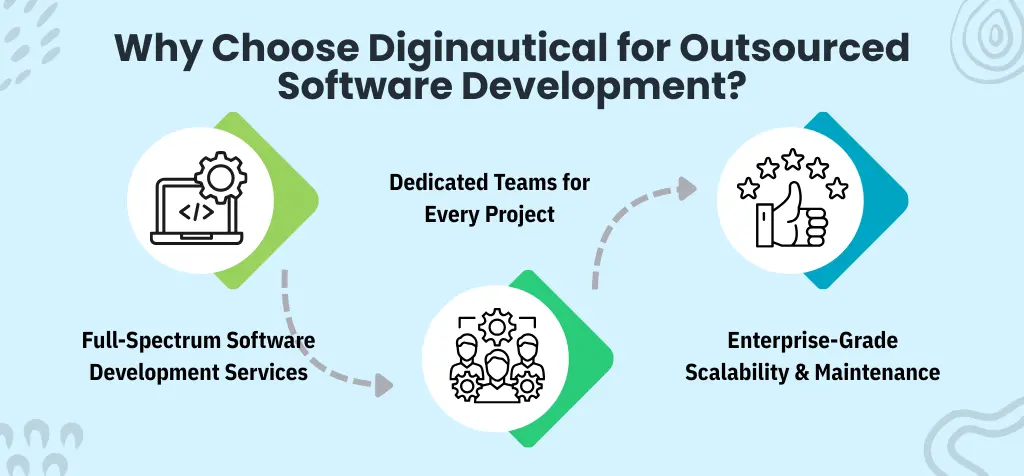
When you work with an experienced team like Diginautical, you can be sure that your software solutions will be scalable, secure, and efficient, and that they will meet the needs of your business.
Full-Spectrum Software Development Services
We provide comprehensive custom software development services, including mobile app development services, hybrid mobile apps, and AI app development services. Additionally, our teams handle CRM development services, delivering end-to-end solutions that align with your operational and strategic goals.
Dedicated Teams for Every Project
Clients can hire custom software developers, hire AI app developers, or hire mobile app developers in Florida to build specialized solutions. Our teams bring expertise across industries, including healthcare software development, fintech, ecommerce software development, enterprise platforms, and SaaS products.
Enterprise-Grade Scalability & Maintenance
Diginautical ensures long-term success with software maintenance & support services and legacy system modernization. Using agile frameworks and product engineering services, we deliver scalable, secure, and adaptable software solutions that evolve alongside business growth and technology trends.
Future Trends in Software Development Strategy
More and more people are using hybrid teams that mix internal experts with remote software development teams. These teams offer a good mix of control and flexibility. Also, SaaS outsourcing trends in 2026 show a move toward subscription-based development models and modular software solutions that can quickly change to meet the needs of the business.
Emerging technologies also have a big impact on how software strategies are made. AI development services are slowly being added to help with code generation, testing, and process optimization. This makes things more efficient without taking the place of human expertise. Companies that use offshore development teams can quickly grow their projects while keeping quality high and costs low.
Final Thoughts
Whether to develop software in-house or outsource it depends on your company’s goals, budget, and long-term plans. Teams that work in-house offer full control and deep institutional knowledge, while outsourcing provides access to specialized talent, faster scaling, and cost efficiency. Partnering with a trusted provider like Diginautical allows businesses to build, scale, and optimize software solutions tailored to their needs.
Frequently Asked Questions
Outsourcing often accelerates deployment thanks to ready-to-go expertise and flexible teams.
Yes, with proper vendor selection, oversight, and clear standards, quality matches or exceeds in-house results.
Typically, yes, especially when factoring recruitment, infrastructure, and long-term overhead.
They combine in-house oversight with remote experts, blending control and scalability.
Healthcare, fintech, SaaS, and e-commerce often gain efficiency, expertise, and faster time-to-market through outsourcing.