In 2026, iPhone apps have become key growth and customer engagement drivers rather than only digital tools. Given the Apple App Store’s projected 38 billion downloads this year, consumer appetite for sleek, user-friendly applications is rising sharply. For startups, product managers, and even established companies venturing into the digital world, this puts iPhone application development at the top of their list.
Despite the opportunities, many businesses aren’t sure where to start. Questions around the iOS app development process, design, development tools, and costs often slow projects before they even begin. That’s why understanding the full journey of iPhone app design and development is crucial for anyone planning to launch a successful app.
This guide is meant for you whether you’re a founder outlining your first wireframe, a product manager considering alternatives, or a novice asking about Swift app development. You will learn not only how to construct iPhone apps from ideation to launch but also why every stage is crucial for producing an experience consumers like.
iPhone app development succeeds when every decision is made with the end user in mind, from architecture to experience. — Syed Irtiza Ali, Brand Manager at Diginautical
By the end, you’ll have a roadmap for developing iPhone apps for beginners, a practical perspective on building iPhone apps step by step, and the insights you need to choose the best approach for your project. Are you ready to jump in? Beginning with what iPhone app development involves and why it will be so effective in 2026.
Read More: A Beginners Guide to iPhone App Development
What Is iPhone App Development and Why It Matters in 2026
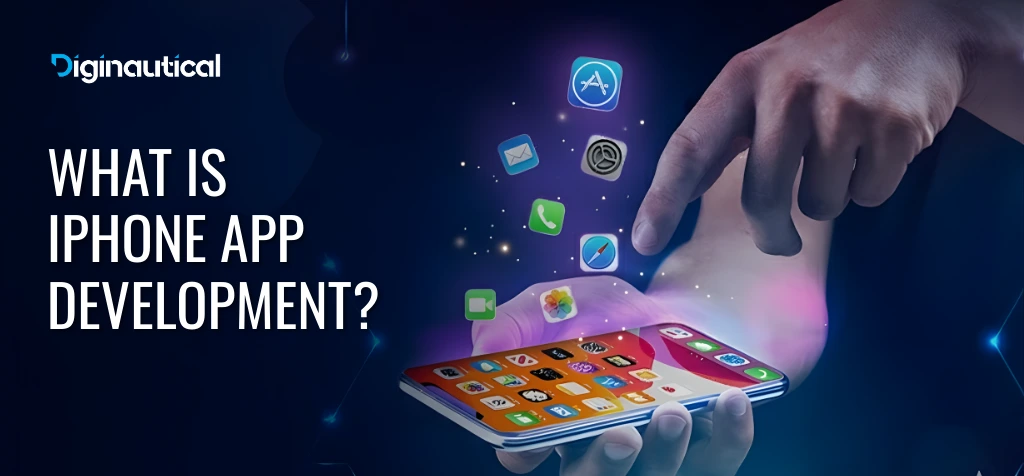
iPhone application development is the design, coding, testing, and deployment of programs made especially for Apple’s iOS platform. Utilizing the iOS mobile app development environment and instruments like Swift and Xcode, it entails developing apps that smoothly operate on iPhone devices. Developers guarantee the app follows Apple’s rules and performs effectively across several iPhone types by paying attention to user experience as well as utility.
The iOS framework provides a rich environment for app development, with frameworks for UI design, APIs for device features, and integrations with Apple services. Whether it’s a consumer-facing app or an enterprise solution, iPhone app development prioritizes reliability, security, and smooth performance, all of which are hallmarks of the Apple ecosystem.
Read More: How to Choose the Best Tech Stack for Mobile App Development
Why Is iPhone Application Development Important in 2026
The need for iPhone applications is still increasing very fast. The iOS app market in 2026 is flourishing as a result of high consumer spending, strong customer loyalty, and the widespread use of the Apple ecosystem. Companies give priority to creating an app for iPhone because the platform has many benefits:
- Security: Apple’s strict app review process and system-level protections ensure apps are safe for users.
- Performance: Optimized hardware and software integration allows apps to run smoothly across all iPhone models.
- Monetization: iOS users are known for higher engagement and spending, making the platform profitable for developers.
iPhone App Development Process Explained Step by Step
One will not achieve success at creating an iPhone app unless one’s efforts are organized in a step-by-step kind of way consisting of strategic planning, structural and visual design, and technical execution.
The iOS app development process makes sure that your application not only works perfectly on Apple smartphones but also provides an excellent user experience. No matter if your goal is to develop a unique mobile application in US or to attract customers globally, this detailed examination will guide you through iPhone app development.
Idea Validation

Every app starts with a straightforward concept. Validating an idea entails determining if your application satisfies a market need and solves a genuine issue. This phase keeps companies from needlessly spending money on features or applications without demand. Think about the competitive environment, user pain issues, and how your program compares with other Android app creation choices at this time.
Market Research

Analyzing trends, user preferences, and revenue models in the iOS ecosystem ensures that your app aligns with current market demands. This step is critical for businesses pursuing custom mobile app development in USA, where market expectations can differ from other regions.
Feature Planning
Prioritize features and define the core of your app. Decide what elements are vital for launch and what can be incorporated in future upgrades. A concentrated feature set improves usefulness and accelerates development.
Wireframing
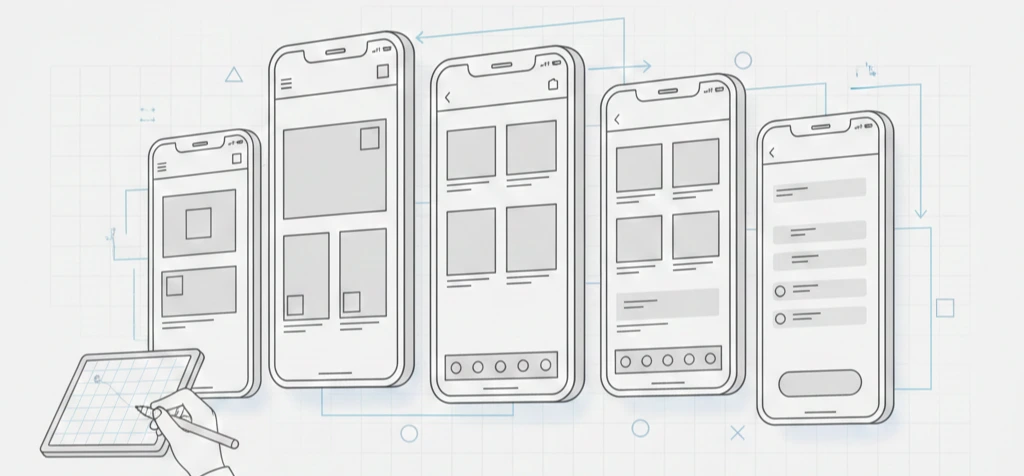
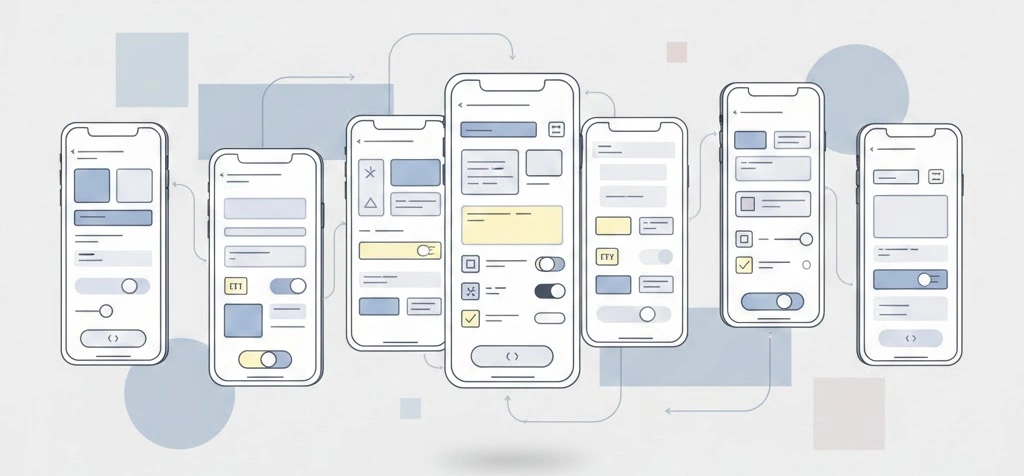
Wireframes are the blueprint of your app. They outline the app’s structure and flow, showing how users will navigate between screens. This visual planning is crucial for designers and developers to align early on the app’s functionality and layout.
Prototyping
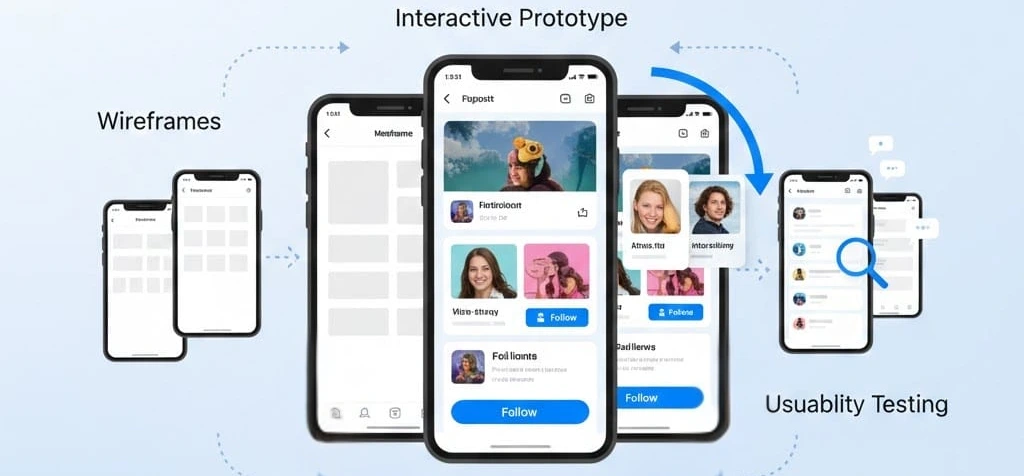
Prototypes bring wireframes to life by adding interactivity. They simulate the user experience and allow stakeholders to test navigation, layout, and feature flow before actual development. Early prototyping reduces costly changes later in the iOS app development process.
UI Design
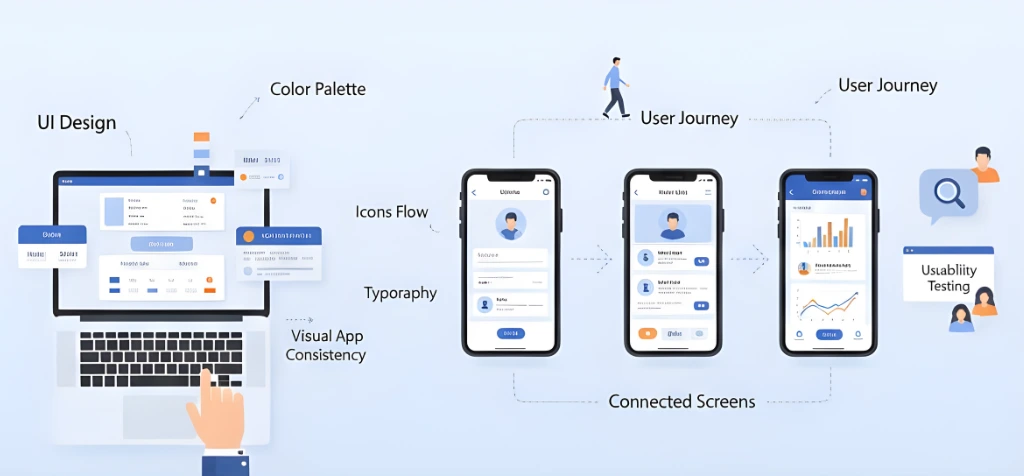
User interface (UI) design focuses on the look and feel of the app. This includes colors, typography, icons, and visual elements that align with your brand. A polished UI enhances user engagement and satisfaction.
UX Design
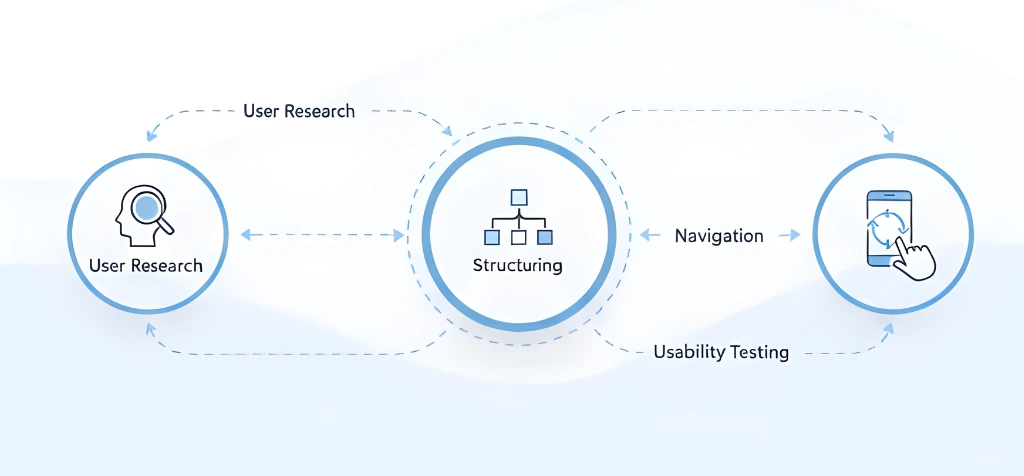
User experience (UX) design ensures the app is intuitive and easy to use. By mapping user journeys, optimizing interactions, and minimizing friction, UX design complements UI to deliver a seamless experience that retains users.
iOS Development

This is the core coding phase where the app is built using Swift, Xcode, and iOS frameworks, often alongside insights from a Flutter app development company, as developers integrate features, APIs, and third-party services while following Apple’s guidelines to ensure performance and compatibility.
Testing & QA

Quality assurance (QA) involves rigorous testing to identify bugs, performance issues, and usability problems. This includes functional testing, compatibility testing across iPhone models, and beta testing with real users to refine the app before launch.
App Store Deployment

The final step is submitting the app to the App Store. This includes preparing metadata, screenshots, and descriptions and following Apple’s submission guidelines.
Read More: 15 Best Mobile App Development Companies in USA
Factors to Look For When Choosing iPhone Application Development
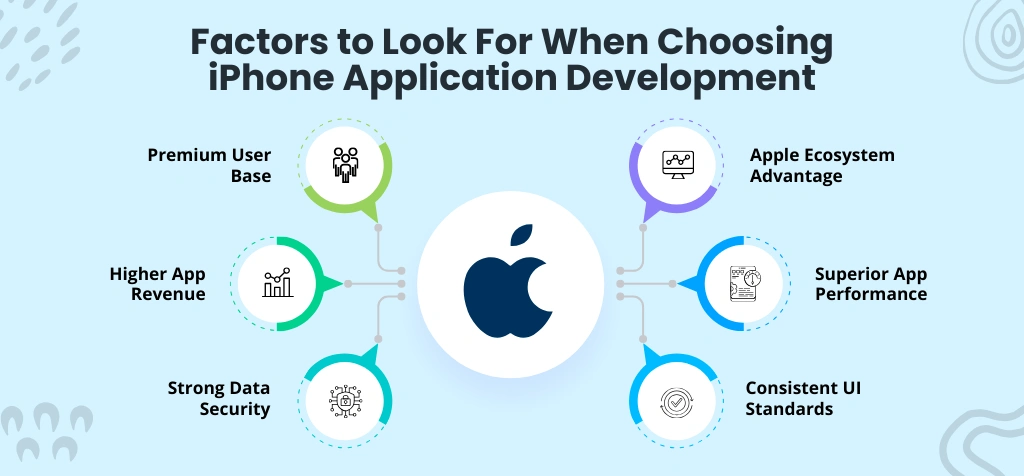
A successful, high-performing iPhone application depends on the approach chosen. The choice affects user experience, app security, and long-term revenue in addition to cost and timeliness for startups and established businesses. The following are important things to think about when organizing how to build an iPhone app:
Premium User Base
One of the strongest advantages of iOS apps is access to a premium user base. iPhone users typically exhibit higher engagement and spending behavior compared to Android app audiences. Building an app for iPhone ensures you target users who are more likely to adopt your product, pay for in-app purchases, and provide valuable feedback.
Higher App Revenue
Revenue potential is another major factor. iOS users are known for higher app store spending, which makes iPhone app development a profitable investment. This advantage is particularly important for monetized apps or subscription-based services, where the right platform choice directly influences return on investment.
Strong Data Security
Data protection is increasingly critical in today’s digital landscape. Apple’s strict privacy standards and ecosystem security make iPhone app development an attractive choice for apps handling sensitive information. Features such as end-to-end encryption, secure APIs, and App Store guidelines ensure your app maintains user trust.
Apple Ecosystem Advantage
Developing for the Apple ecosystem provides seamless integration across devices, including iPhone, iPad, Apple Watch, and Mac. This allows businesses to deliver consistent experiences and leverage tools like iCloud, Siri, and Apple Pay for enhanced functionality.
Benefits include:
- Cross-device compatibility
- Easy app updates and maintenance
- Integration with Apple services for better user engagement
Superior App Performance
iOS apps generally offer smoother performance due to the close integration of hardware and software in the Apple ecosystem. Optimized iOS mobile app development ensures faster load times, minimal crashes, and efficient battery usage, providing users with a polished and reliable experience.
Consistent UI Standards
Apple imposes demanding interface rules that support uniform design across every application. Following these guidelines in iPhone app creation and development guarantees your app is intuitive, visually appealing, and matches user expectations, thus simplifying competition with cross-platform apps.
iPhone App Design and Development Best Practices (UI, UX & Performance)
Beyond code, effective iPhone app design and development combines intuitive design, great user experience, and enhanced performance. Following best standards guarantees your app is interesting, scalable, and ready for the App Store whether you intend to develop iOS apps for healthcare, real estate, logistics, or other industries.
Apple Human Interface Guidelines
The foundation of any iOS app lies in Apple’s Human Interface Guidelines (HIG). These guidelines provide a framework for designing visually consistent, intuitive, and accessible interfaces. Following HIG ensures that your app aligns with iOS conventions, making navigation seamless for users. This is particularly important when you want to build iOS apps that feel native and professional, setting your app apart from generic Flutter mobile apps or hybrid mobile app alternatives.
UX Psychology for iPhone Apps
In the creation of iOS mobile apps, knowledge of user behavior is essential. Intuitive motions, visual hierarchy, and cognitive load reduction all help to produce an app that seems natural and interesting using UX psychological theories. Designing with user expectations in mind will help you to raise engagement and guarantee that consumers return to your app frequently, whether it’s a real estate purchasing portal, a logistics management tool, or a healthcare monitoring application.
Key principles include:
- Reducing cognitive load with simple navigation
- Clear visual hierarchy and intuitive gestures
- Designing flows that anticipate user behavior
Accessibility Standards in iOS Apps
Accessibility is a key factor in building inclusive apps. iPhone application development provides features like VoiceOver, Dynamic Type, and color contrast guidelines to ensure your app is usable for all users. Integrating accessibility from the start is crucial for apps in sensitive sectors like healthcare, where accessibility can directly impact usability and compliance, and enhances overall iPhone app design and development quality.
Performance Optimization
User satisfaction is directly impacted by performance. Optimizing your app guarantees quick load times, fluid animations, and low battery usage. Effective memory management, background task optimization, and cautious API usage are some strategies. High-performing apps uphold user confidence and promote consistent interaction, whether you’re creating them for real estate or logistics.
Scalable and Future-Ready App Architecture
A scalable architecture ensures your app can grow with your business. Using modular code structures, reusable components, and cloud-ready integrations allows for easy updates and feature expansion. Planning for scalability during iPhone app design and development avoids major rewrites later, whether you aim to expand your Flutter mobile apps into native iOS apps or enhance existing iOS mobile app development projects.
Read More: 10 Reasons CTOs Choose Flutter for Their Mobile App Strategy
Ways to Build an iPhone App: Developer vs Agency vs App Builder
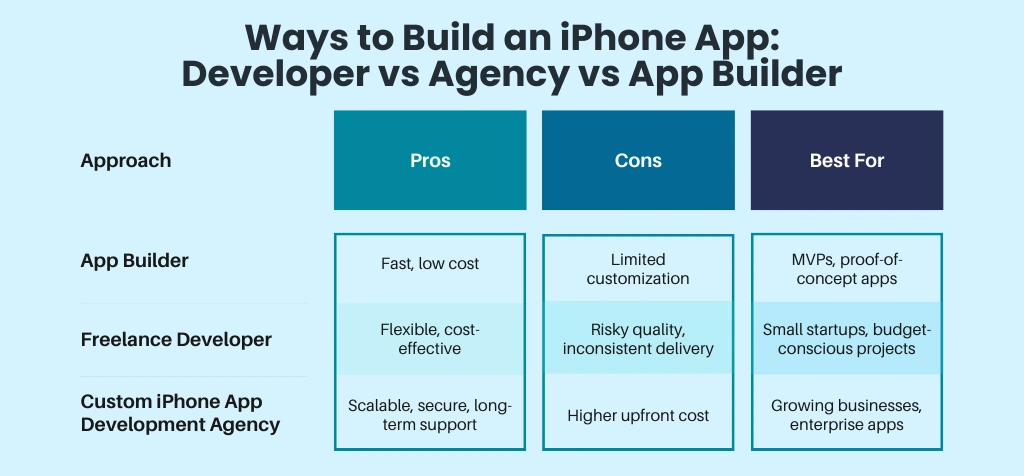
When planning how to build an app for iPhone, businesses and startups have several development approaches to choose from. The right choice depends on factors like budget, timeline, app complexity, and long-term goals. Below is a detailed comparison of the three main options for iPhone application development:
Comparison Between Developer vs Agency vs App Builder
| Approach | Pros | Cons | Best For |
|---|---|---|---|
| App Builder | Fast, low cost | Limited customization | MVPs, proof-of-concept apps |
| Freelance Developer | Flexible, cost-effective | Risky quality, inconsistent delivery | Small startups, budget-conscious projects |
| Custom iPhone App Development Agency | Scalable, secure, long-term support | Higher upfront cost | Growing businesses, enterprise apps |
When App Builders Make Sense
App builders are ideal for minimum viable products (MVPs) or projects with tight timelines and limited budgets. They allow entrepreneurs to quickly launch a functional app without deep technical expertise. While app builders are fast and cost-effective, they may restrict customization and advanced features. For businesses testing new ideas, app builders can provide a quick entry point into iPhone application development.
Risks of Freelancers
Hiring mobile app developers offers flexibility and often lower costs than agencies. Freelancers are suitable for small projects or startups looking for a single developer to handle coding. However, freelancers can present risks such as inconsistent quality, limited accountability, and potential delays. Without a structured team, maintaining long-term support and scaling your app can be challenging.
Long-Term Benefits of Agencies
The most thorough approach for companies wanting long-term expansion is to hire a custom iPhone app development business. Agencies offer post-launch assistance as well as design, development, and testing specialists. Following organized iOS app creation, they help to make your app performable, secure, and scalable. Though the starting cost is more, agencies lower risk, offer strategic counsel, and assist your app in future-proofing market change.
Read More: Top 10 Flutter App Development Companies in USA
Cost, Timeline, and Technology Stack for iPhone App Development
Building an iPhone app is an exciting venture, but one of the first questions businesses and beginners ask is, “How much will it cost, and how long will it take? ”.
Understanding the cost, development timeline, and the technology stack is critical for iPhone app development for beginners as well as experienced teams exploring iOS mobile app development.
Cost Ranges
The cost of iPhone application development depends largely on its complexity, features, and the development approach:
Simple Apps:
-
-
- Basic functionality (e.g., calculators, informational apps)
- Minimal backend requirements
- Estimated cost: $10,000–$30,000
-
Moderate Apps:
-
-
- User authentication, APIs, and basic database integration
- Examples: e-commerce, booking, or real estate apps
- Estimated cost: $30,000–$70,000
-
Complex Apps:
-
- Advanced features like AI integration, real-time data sync, payment gateways
- Examples: healthcare monitoring apps, logistics tracking apps, or enterprise solutions
- Estimated cost: $70,000+
The cost is also affected by the proper development method for freelancer, agency, or custom software development in USA.
Development Timelines Explained
Development timelines depend heavily on app scope, design complexity, and team structure. A simple iPhone app with clearly defined requirements can be completed in a short timeframe, especially when features are minimal and well-documented.
Moderately complex apps take longer due to multiple development phases, including UI/UX design, backend integration, and quality assurance. Testing across different iPhone devices and iOS versions adds additional time.
Highly complex apps, especially those involving AI, real-time communication, or enterprise integrations, require extended timelines. These projects often follow an iterative development cycle, ensuring performance optimization and future scalability throughout the iOS mobile app development process.
Technology Stack Overview
Swift App Development
Swift is Apple’s primary programming language for iOS apps and plays a central role in modern iPhone application development. Designed for performance and security, Swift enables developers to write clean, efficient code while reducing the risk of errors.
Swift is particularly well-suited for scalable apps that require long-term maintenance and feature expansion. Its strong compatibility with Apple frameworks makes it ideal for both startups and enterprises building reliable iPhone applications.
SwiftUI for Modern Interface Design
SwiftUI is Apple’s framework for building user interfaces declaratively.
- Streamlined UI development for multiple iOS devices
- The hot-reload feature accelerates testing and iteration
- Works seamlessly with Swift for scalable app architecture
Xcode
Xcode is Apple’s official development environment and is essential for building, testing, and deploying iPhone apps. It provides tools for debugging, performance monitoring, and testing across multiple iOS versions and devices.
Xcode also integrates seamlessly with Swift and SwiftUI, making it a foundational tool for teams involved in Swift app development and professional iPhone app projects.
APIs and Third-Party Integrations
APIs allow iPhone apps to connect with external services, cloud platforms, and internal systems. These integrations enable features such as payment processing, user authentication, analytics, and data synchronization. For industries like manufacturing, healthcare, and education, APIs are critical in creating seamless digital experiences and supporting scalable app functionality.
AI Features
AI integration is becoming increasingly common in modern iPhone apps. From personalized recommendations to predictive analytics and automation, AI enhances user engagement and operational efficiency.
Custom iPhone apps are increasingly incorporating AI. AI improves user engagement and operational efficiency through automation, predictive analytics, and personalized recommendations.
Read More: How to Build Mobile Apps with Flutter
Why Choose Diginautical for Custom iPhone App Development
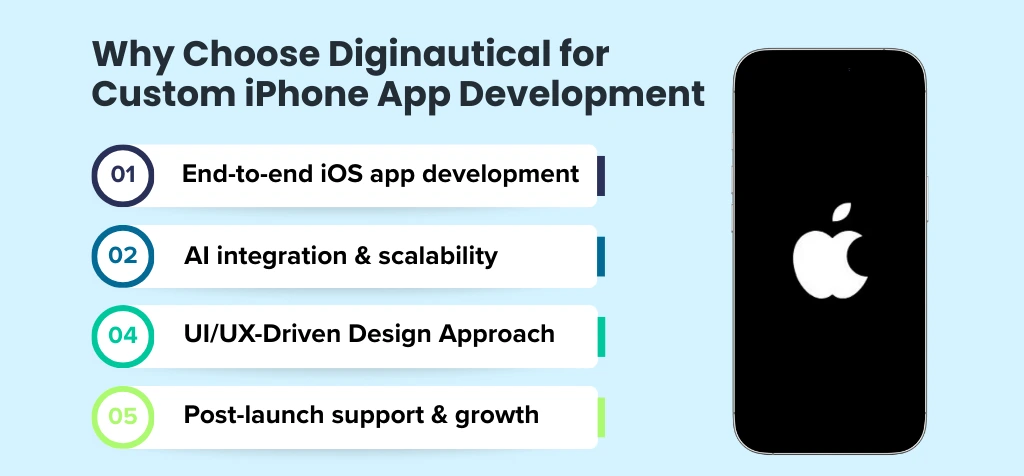
At Diginautical, we specialize in offering top-notch iPhone application development services that fit corporate objectives, consumer expectations, and long-term expansion plans. Our methodology helps companies create dependable and scalable iOS apps by combining technical knowledge, strategic planning, and industry experience.
End-to-End iOS App Development
Diginautical offers complete iPhone app design and development services, covering every stage of the app lifecycle. From initial concept validation and UI/UX design to development, testing, and App Store deployment, our team manages the entire process with precision. This end-to-end approach ensures consistency, reduces risks, and accelerates time to market for businesses seeking custom iPhone app development in USA.
AI Integration and Scalable Solutions
Modern iPhone apps demand more than just fundamental capability. To improve app performance and engagement, Diginautical combines AI-driven technologies, including intelligent automation, predictive analytics, and tailored user experiences. Whether you run in automotive, B2B software, or fast-paced consumer industries, our development approach emphasizes scalability to guarantee your app can change along with your business.
UI/UX-Driven Design Approach
Our designers design intuitive, high-performance interfaces by combining UI/UX research and usability testing with Apple’s design philosophy. This technique guarantees that your app provides significant value to users in addition to appearing polished, therefore boosting retention and adoption across many sectors, including ecommerce web development companies moving into mobile apps.
Post-Launch Support and Growth
Launching your app is just the beginning. Diginautical provides ongoing support, performance monitoring, and feature enhancements to ensure long-term success. From OS updates to scalability improvements and user feedback implementation, our post-launch services help your iPhone app remain competitive and future-ready.
By combining technical excellence with strategic insight, Diginautical empowers businesses to build iPhone apps that are secure, scalable, and designed for real-world impact. Whether you’re developing a new product or modernizing an existing solution, our team is equipped to support your journey in custom iPhone app development in USA.
Read More: How Much Does It Cost to Develop an iOS App
Final Thoughts
As demonstrated in this guide, knowing how to build an iPhone app is more than just writing code; it is also about following a structured process that ensures performance, usability, and scalability throughout the iOS mobile app development lifecycle.
Equally important is choosing the right development path. Whether you work with an app builder, a freelance developer, or a professional agency, the decision directly impacts quality, security, and long-term growth. For businesses seeking reliability and future-ready solutions, investing in professional iPhone application development helps reduce risks and ensures your app aligns with both user expectations and business objectives.
Partnering with an experienced team like Diginautical ensures that your app is designed, built, and scaled for long-term success, allowing you to transform your idea into a high-performing iOS product.
Frequently Asked Questions
The cost of iPhone application development depends on app complexity, features, and development approach. Simple apps cost less, while custom and feature-rich apps require a higher investment.
The iOS app development process typically takes a few months, depending on scope and functionality. Simple apps take less time, while complex apps require longer development cycles.
Yes, iPhone app development for beginners is possible using no-code or low-code tools, but these options offer limited customization and scalability.
Swift app development is the primary approach for building modern iOS apps, offering better performance, security, and long-term support.
Yes, iPhone app design and development allows startups to build scalable, high-quality apps that support growth, branding, and long-term business goals.