

Businesses that made mobile a priority three years ago are now watching their competitors scramble to catch up. According to Statista, the global mobile app market is projected to generate over $935 billion in revenue by 2023, and that number has only climbed since.
As competition intensifies, businesses are moving beyond generic solutions and investing in custom mobile application development services to create high-performance apps. Custom development means making an app that fits your specific users, workflows, and growth goals, as opposed to off-the-shelf solutions that are made for the average business. Mobile app development done right is not an expense; it’s one of the best investments a business can make in how it runs and grows, whether you’re a startup launching your first product or a big company with thousands of daily users.
We do not just build apps; we build the mobile infrastructure businesses rely on to operate, grow, and retain customers for years. — Mubashir Faiz, CEO, Diginautical
Companies often hire mobile app developers who can create secure, scalable, and future-ready apps that meet changing market needs. This is true whether they want to build platforms with a lot of features or improve performance.
Read More: Who Needs Mobile App Development Services
What Are Custom Mobile Application Development Services?
Custom mobile application development services refer to the process of designing, building, and maintaining mobile apps tailored to specific business requirements. This approach ensures better scalability, seamless performance, and stronger security. The mobile app development lifecycle (SDLC) plays a critical role here, guiding projects through structured phases from planning to deployment while maintaining quality and consistency.
The amount of work that goes into each phase is what makes a high-performing custom app different from a generic one. Every layer is built with a purpose, from mobile app UI/UX design services that put the user at the center of every screen to strong mobile app integration services that make sure your app works with other apps without any problems with third-party tools, payment gateways, and backend systems.
A full-cycle custom mobile app service usually includes the following:
- Requirement analysis and strategic planning
- User interface and experience design
- Application development and coding
- Quality assurance and performance testing
- Deployment across app stores and platforms
- Ongoing maintenance and updates
Read More: How Mobile Apps Are Transforming Different Industries
Core Types of Mobile App Development Services
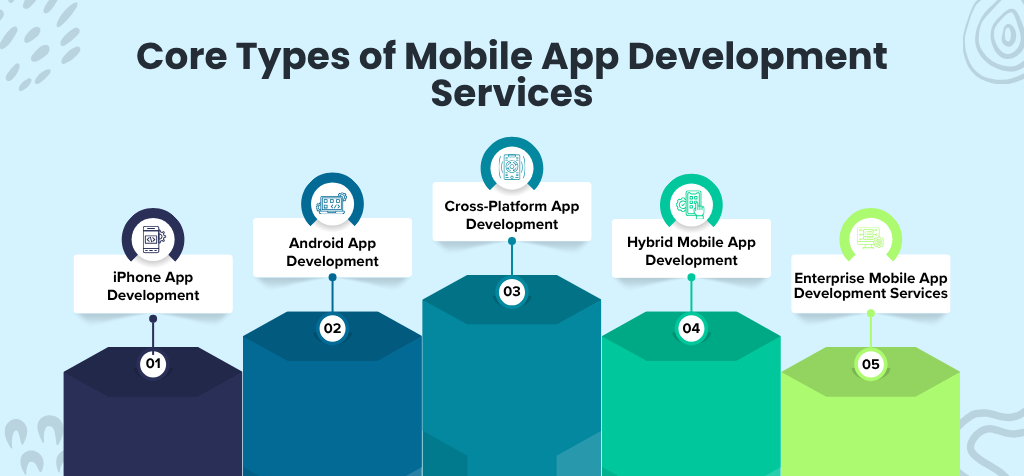
Every business has unique requirements, and selecting the right development approach is essential to achieve performance, scalability, and user satisfaction. Here is a breakdown of the core service types and what each one is best suited for.
iPhone App Development
The goal of iPhone app development is to make native iOS apps that use all of Apple’s features, like Face ID, ARKit, and easy iCloud integration. Apple users expect every interaction on their device to be precise, fast, and up to the high standards they expect from all apps.
Android App Development
Android app development makes it possible to create apps that can run on a wide range of devices and screen sizes and are scalable and high-performing. More than 70% of the world’s smartphones run Android, so businesses that don’t use Android are missing out on a lot of potential customers.
Cross-Platform App Development
Cross-platform app development uses frameworks like Flutter and React Native to build a single codebase that runs natively on both iOS and Android. It cuts development time significantly, reduces cost, and ensures a consistent user experience across both platforms without building two separate products.
Hybrid Mobile App Development
Hybrid mobile app development combines web technologies like HTML, CSS, and JavaScript wrapped inside a native app shell. It is a practical choice for businesses that need to launch quickly, work within a tighter budget, and still deliver a functional, multi-platform product to their users.
Enterprise Mobile App Development Services
Enterprise mobile app development services are designed for organizations that need large-scale, secure, and compliance-ready applications. From workforce management tools to internal operations platforms, these apps are built to handle complex processes, high user volumes, and strict industry regulations without compromising performance.
Read More: What is Enterprise App Development? A Complete Guide
Industries That Rely on Mobile Application Development Services
Mobile apps are now necessary in all industries because they help businesses deliver faster, smarter, and more personalized digital experiences. They do this by streamlining operations and improving customer engagement.
Healthcare
Mobile apps for healthcare companies enable patient portals, appointment scheduling, and secure data management while supporting telemedicine services. With custom software development services and hybrid mobile app development services, healthcare providers ensure compliance, real-time communication, and improved patient outcomes through scalable digital solutions.
Finance
Mobile apps for finance and fintech power secure transactions, digital wallets, and real-time banking experiences. A finance software development company uses hybrid mobile app development services to build compliant platforms that enhance security, streamline operations, and deliver seamless financial services to users.
Ecommerce & Retail
Mobile apps for online stores make shopping better by offering personalized suggestions, sending push notifications, and making checkout easy. Businesses use custom software development services to make apps that work well and get people to engage with them, convert them, and keep them coming back.
Logistics & Supply Chain
From fleet tracking to real-time delivery updates, a logistics software development company builds apps that keep operations visible and accountable. Mobile apps for logistics and supply chains reduce manual errors, improve coordination across teams, and give managers live data when and where they need it.
SaaS & Education
Whether it is a subscription dashboard or a learning management system, Android mobile app development services make it possible to reach users on any platform without doubling the development budget.
Read More: A Complete Guide to Healthcare Software Development
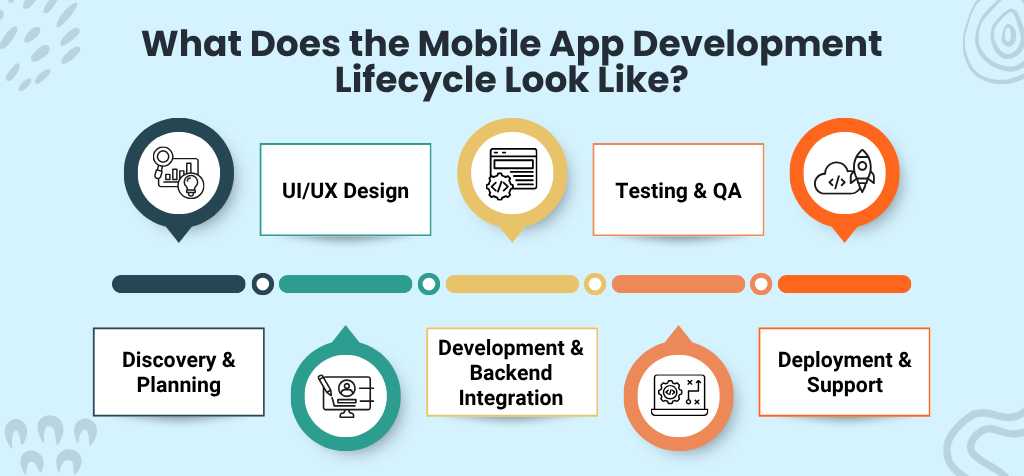
What Does the Mobile App Development Lifecycle Look Like?
The mobile app development lifecycle (SDLC) makes sure that every step, from idea to launch, is optimized for performance, scalability, and long-term success by using DevOps for mobile apps and smart deployment plans.
Discovery & Planning
Clarity is the first step in making a good app. Before writing any code, goals are set, target audiences are identified, and technical requirements are recorded. This step sets the whole project on the right path and stops expensive changes later on.
UI/UX Design
Great mobile app UI/UX design services make interfaces that are easy to use based on what users need. First, wireframes are made, and then interactive prototypes are made that let people give feedback before development starts. This saves time, cuts down on rework, and keeps the user experience sharp from the start.
Development & Backend Integration
This is where the product takes shape. Frontend interfaces are built alongside robust backend integration for mobile apps by covering API connections, database architecture, and third-party service integrations. ERP development and enterprise system connections are also handled at this stage for larger-scale projects.
Testing & QA
No app ships without rigorous validation. Mobile app testing and QA services cover functional testing, performance benchmarking, security audits, and device compatibility checks, ensuring the app performs reliably across every environment it will be used in.
Deployment & Support
The last step is to put mobile app deployment plans into action, like submitting apps to app stores and managing releases. After the launch, software maintenance and support services ensure the app receives updates, bug fixes, and performance improvements to keep it safe, useful, and able to grow.
Key Technical Features of a Well-Built Mobile App
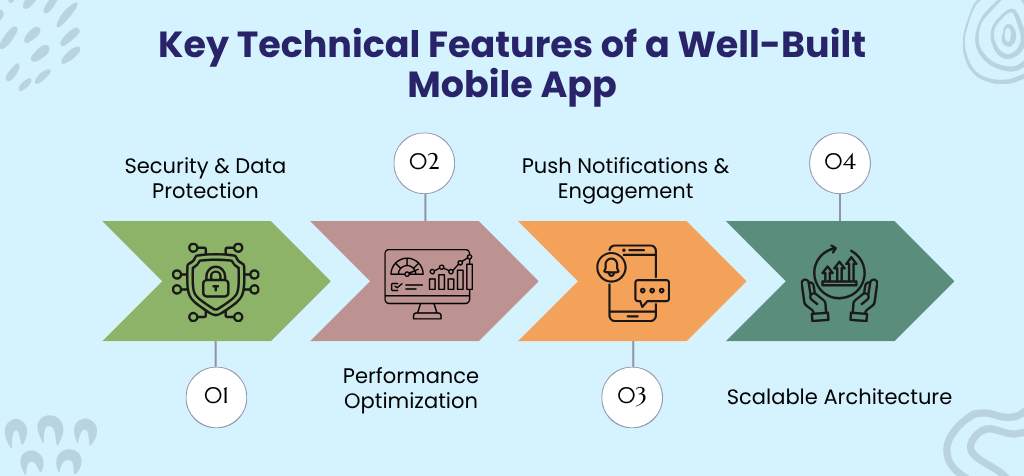
A mobile app that works well combines features, safety, and the ability to grow to give users a smooth experience. These technical features ensure long-term success and engagement for both startups and businesses, from strong data protection to performance optimization.
Security & Data Protection
Secure mobile app development is critical for protecting sensitive user data and business information. Incorporating encryption, secure APIs, and industry compliance standards safeguards against breaches while building user trust, making your app reliable and safe across platforms and devices.
Performance Optimization
Mobile app performance optimization ensures fast load times, smooth navigation, and minimal crashes. By refining backend processes and front-end design, users enjoy a seamless experience, improving retention rates and overall satisfaction across Android, iPhone, and cross-platform applications.
Push Notifications & Engagement
Push notification implementation allows businesses to send personalized alerts that drive engagement without being intrusive. Targeted messaging encourages repeated app use, increases retention, and strengthens customer relationships, supporting growth and marketing strategies effectively.
Scalable Architecture
Scalable mobile solutions for business make sure that your app can grow with the number of people who use it. Scalable mobile app development is meant to handle more traffic, features, and data. It keeps costs down by avoiding expensive overhauls and makes sure that the app will work well for a long time.
Read More: Mobile Application Security Best Practices
Mobile App Development Cost in the USA: What to Expect
Understanding the mobile app development cost in USA helps businesses plan budgets and choose the right services. The cost of an app depends on how complicated it is, what platform it runs on (iPhone, Android, or cross-platform), what design requirements it has, how well it works with other apps, and how secure it is.
Hiring experienced developers or using mobile app development services in Florida or other areas can affect the total cost.
| App Type | Features | Approximate Cost (USD) |
|---|---|---|
| Basic App | Simple UI, limited screens, no complex backend | $20,000 – $50,000 |
| Mid-Level App | Custom design, APIs, database integration, push notifications | $50,000 – $120,000 |
| Enterprise App | Advanced features, complex backend, multi-platform, high security | $120,000 – $300,000+ |
Businesses can hire custom mobile app developers to optimize cost and quality. Outsourced mobile app development services often provide flexibility and access to specialized skills while maintaining competitive pricing. Proper planning ensures ROI and a smooth development lifecycle.
Read More: How Much Does App Development Cost in Florida
Why Choose Diginautical for Custom Mobile Application Development Services?
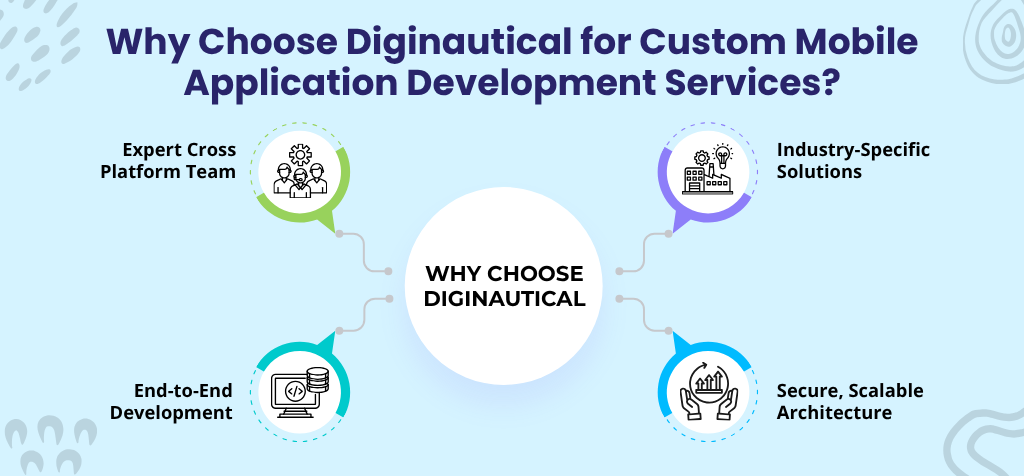
Not every development partner builds with your business in mind. Diginautical does. From the first strategy call to post-launch performance, every decision is made around your goals, your users, and the long-term success of your product.
Expert Cross-Platform Team
When you hire mobile app developers at Diginautical, you work with specialists who are fluent across iOS, Android, hybrid, and cross-platform frameworks. One team, every platform, and zero compromise on quality or performance, regardless of where your users are.
End-to-End Development
Diginautical’s custom mobile application development services cover every stage of your product’s life. From early ideation and UI/UX design through development, testing, deployment, and mobile app consulting services, nothing is handed off or left to chance at any point in the process.
Industry-Specific Solutions
Every industry has its own rules, compliance requirements, and user expectations. Diginautical builds for healthcare, fintech, ecommerce, logistics, and SaaS with solutions shaped around what each sector actually demands, not a generic template applied across the board.
Secure, Scalable Architecture
Every app Diginautical delivers is built on a secure, scalable foundation from day one. With dedicated mobile app maintenance and support services, your product stays protected, performs under load, and evolves cleanly as your business and user base grow.
Read More: How to Choose the Best Tech Stack for Mobile App Development
Final Thoughts
Investing in custom mobile application development services ensures your business stays competitive, delivers seamless user experiences, and scales with growth. Tailored apps enhance engagement, improve retention, and provide a measurable ROI, making them essential for startups and enterprises alike.
Partnering with Diginautical allows you to hire custom mobile app developers who specialize in iPhone, Android, hybrid, and cross-platform solutions. From strategy and design to development, integration, and ongoing support, Diginautical delivers secure, high-performing apps that align with your business goals.
Frequently Asked Questions
Startups, enterprises, and industry-specific businesses like fintech, healthcare, eCommerce, and logistics see measurable engagement and efficiency gains.
Custom apps are built for your exact needs, offering scalable architecture, secure integration, and unique UX/UI design.
Complexity, platform choice, features, security needs, and third-party integrations all affect investment levels.
Depending on scope, apps take 3–9 months from ideation to deployment, including testing and optimization phases.
Yes. Well-designed apps improve engagement, retention, and conversions, often delivering 30–50% higher returns compared to traditional digital channels.